It takes a whole lot of planning for any event to be successful today. You need to get approval, funding, or even secure buy-ins from stakeholders, and this is where the real challenge lies.
Your idea will only take you so far if you have a strong event proposal to support it. Stakeholders want to see feasibility, measurable outcomes, and a clear return on investment.
We’ll explore 10 event proposal template ideas and also cover the ideal format for an event proposal, proven writing strategies, and real examples for you.
What is an Event Planning Business Proposal?
An event planning business proposal is a formal document used to pitch event services to clients, sponsors, and stakeholders.
This proposal does more than a simple event outline or internal plan, which focuses on coordination. It is more persuasive and useful in gaining stakeholder approval by showing your expertise, purpose, and feasibility of the project.
Event Proposal Format: Key Components
What should an event proposal look like? The table below outlines the core components you should include in any professional event proposal:
| Component | Purpose | Why It Matters |
| 1. Event overview | Summary of the event concept | Sets expectations early |
| 2. Objectives | Goals of the project | Shows strategy |
| 3. Target audience | Defined the attendee profile and number | Demonstrates relevance of the project |
| 4. Logistics | Venue, date, setup, and staffing | Proves feasibility |
| 5. Timeline | Planning schedule | Reflects organisation and readiness |
| 6. Budget | Cost breakdown, expected revenue, or ROI | Builds financial transparency |
| 7. Marketing Plan | Promotion strategy | Shows attendance potential |
| 8. Call to action | Approval request | Next steps |
How to Write an Event Proposal (With Practical Tips)
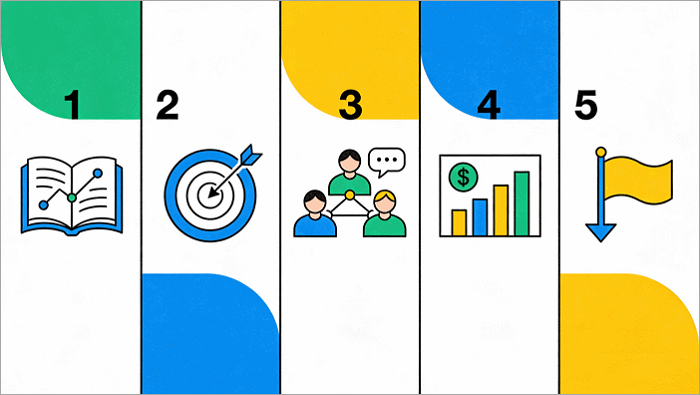
Let us walk you through writing one that convinces any stakeholder:
Step 1: Start with a story
Use a relevant narrative to describe the problem your event solves, a past success, or a real audience need. If your story is compelling enough, it’ll set context and make stakeholders emotionally invested before reviewing numbers.
Step 2: Define the objectives of the project
Briefly introduce the event and state measurable and realistic goals — For example, “Generate 500 qualified leads”.
Step 3: Align with stakeholder priorities
Tweak your event planner business proposal to reflect what stakeholders value most, such as brand exposure, ROI, community impact, or revenue growth.
Step 4: Present a transparent budget
Every stakeholder trusts proposals that acknowledge trade-offs. So, make a breakdown of projected expenses as clear as possible.
Step 5: End with a clear call to action
Specify what approval you need and by when to avoid delays.
Top 10 Event Proposal Samples and Templates
Let’s check out 10 event proposal examples and templates you can adapt for different scenarios.
1. Corporate Conference Proposal
This type of proposal is ideal for large-scale corporate conferences involving multiple stakeholders in the approval process. It is ideal for annual meetings or leadership summits.
It features a detailed agenda, speaker lineup, venue comparison, and a clear ROI section that connects the event to business objectives.
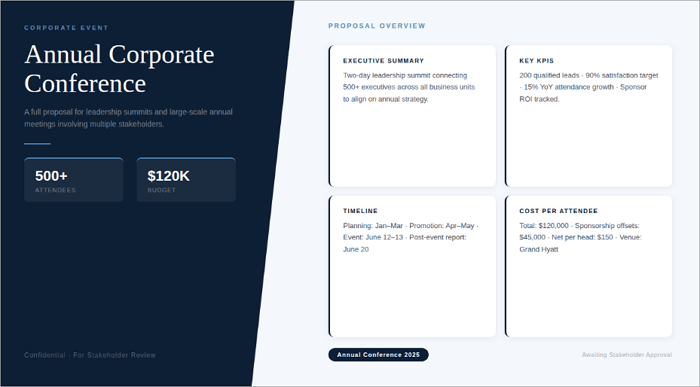
Key strengths of this proposal include:
- Clear executive summary
- Defined KPIs
- Structured timeline
- Detailed cost-per-attendee analysis
💡 Recommended AiPPT.com Template: Modern Project Proposal Presentation Template
2. Fundraising Gala Proposal
A fundraising proposal suits nonprofit organizations and charities. It delves more into donor engagement, ticket pricing tiers, and expected fundraising outcomes.
Usually, fundraising proposals lead with emotional impact before moving into logistics, and this strategy works well when appealing to philanthropic values.
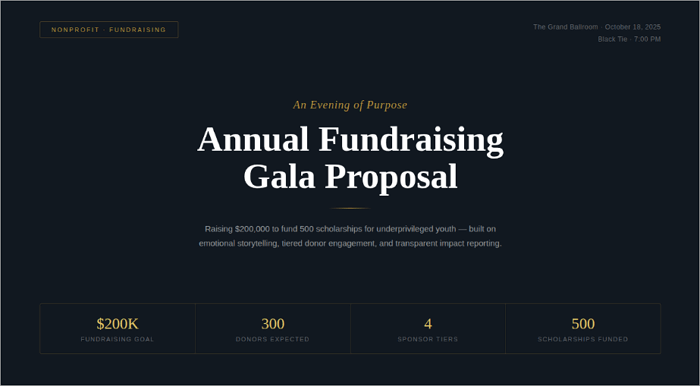
Key strengths of this proposal include:
- Clearly stated donation targets
- Sponsor tiers
- Emotional storytelling
💡 Recommended AiPPT.com Template: Free Sequoia Capital Style Pitch Deck PowerPoint Template
3. Product Launch Proposal
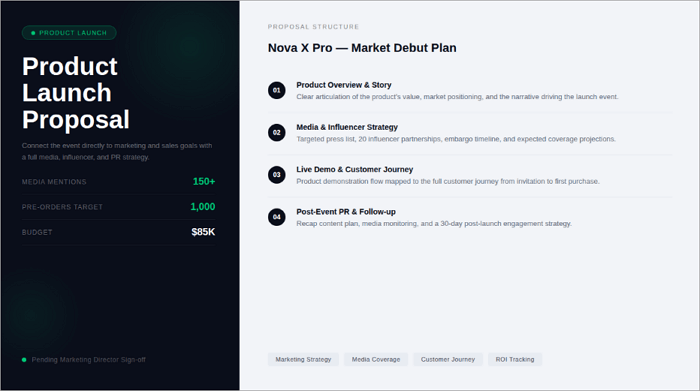
Have you got a product launch event on the way? This proposal model works quite well for it. It helps connect the event directly to marketing and sales goals.
It features a product overview, target media and influencer list, live demonstration plan, and post-event PR strategy.
Key strengths of this proposal include:
- Marketing strategy breakdown
- Media coverage projections
- Detailed customer journey
💡 Recommended AiPPT.com Template: Free Startup Investor Pitch Deck Template, Blue & Gold Style
4. Virtual Event Proposal
As remote events such as webinars and hybrid conferences have become mainstream, the virtual summit proposal now exists as its own distinct format.
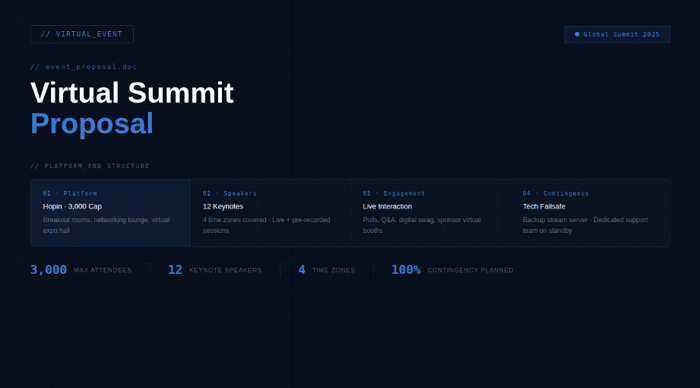
This event proposal sample addresses platform selection, technical requirements, speaker management, and digital attendee engagement strategies.
Key strengths of this proposal include:
- Virtual options comparison
- Contingency plan for technical failures
- Time zone considerations for attendees
💡 Recommended AiPPT.com Template: Green Business Advanced PPT Seminar Proposal Template
5. Community Festival Proposal
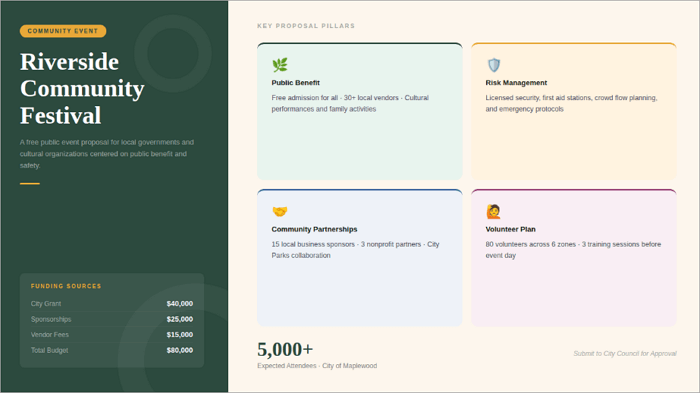
An event proposal like this is best for local governments, cultural organizations, and local community events. It reflects public benefit, safety planning, and volunteer coordination.
Key strengths of this proposal include:
- Risk management section
- Community partnerships
- Funding sources (grants, ticket sales, and sponsorship)
💡 Recommended AiPPT.com Template: 3D Purple Halloween Event Presentation Template
6. Sports Event Proposal
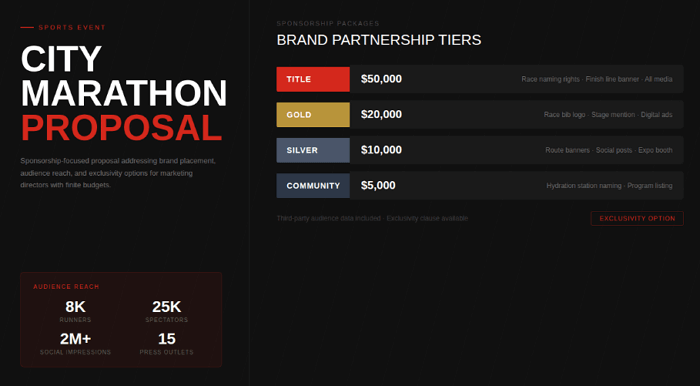
This type of proposal is written for any sports event, including football, basketball, tennis, or even swimming competitions. It is usually addressed to a brand manager or marketing director with a finite budget and multiple sponsorship opportunities competing for it.
Key strengths of this proposal include:
- Third-party audience data
- Visual brand placement diagram for sponsor logos
- Exclusivity clause option
💡 Recommended AiPPT.com Template: Free Minimalist Olympic Games Presentation Template
7. Educational Workshop Series Proposal
The educational workshop proposal is quite common among training companies, universities, and professional development organizations pitching to procurement teams or academic committees.
You should be aware that the approval process here is often more formal than in other event types.
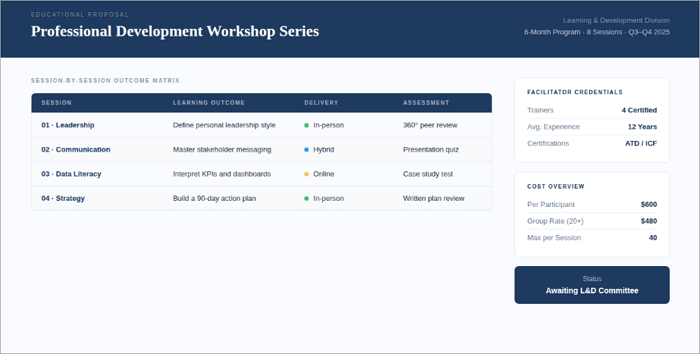
Key strengths of this proposal include:
- Session-by-session outcome matrix
- Presentation of facilitator credentials
- Highlights delivery options
💡 Recommended AiPPT.com Template: Free EdTech Pitch Deck Presentation Template
8. Annual Awards Ceremony Proposal
This event plan example is ideal for industry associations, media companies, and corporate recognition programs. A strong proposal in this category not only plans the event, but it also protects the integrity of the award itself.
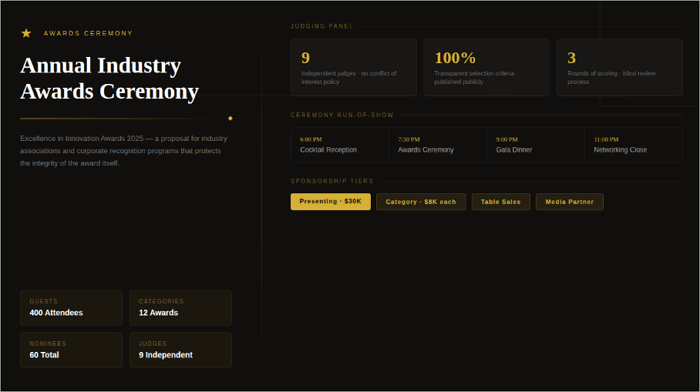
Key strengths of the proposal include:
- Transparent judging panel selection criteria
- Detailed ceremony run-of-show
- Tiered presenting sponsor opportunities
💡 Recommended AiPPT.com Template: Dynamic Proposal Pitch Deck Template
9. Trade Show Proposal
If you have a trade show event coming up, a proposal like this can help you pitch to exhibitors or sponsors, justifying participation costs.
Every section of your proposal must answer one core question: Will this event put our brand in front of the right buyers?
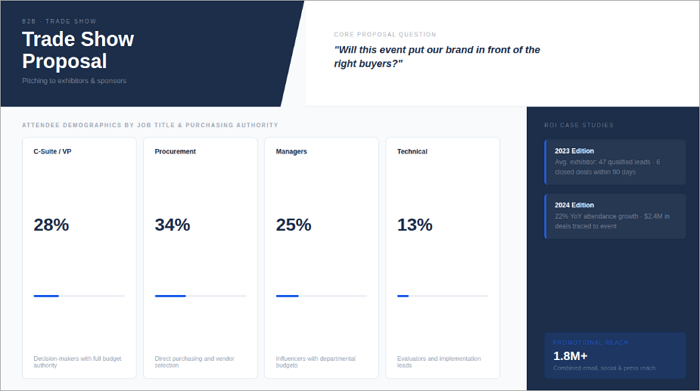
Key strengths of the proposal include:
- Segregation of attendee demographics by job title and purchasing authority
- ROI case studies from past editions
- Promotional reach summary
💡 Recommended AiPPT.com Template: Winning Business Case PowerPoint Template
10. Birthday Event Proposal
A birthday event proposal example is commonly used by professional event planners to present a concept to a client.
Unlike corporate proposals, the tone can be warmer and more personal, but structure is still important. The client needs to feel excited about the vision while trusting that logistics and budget have been carefully handled.
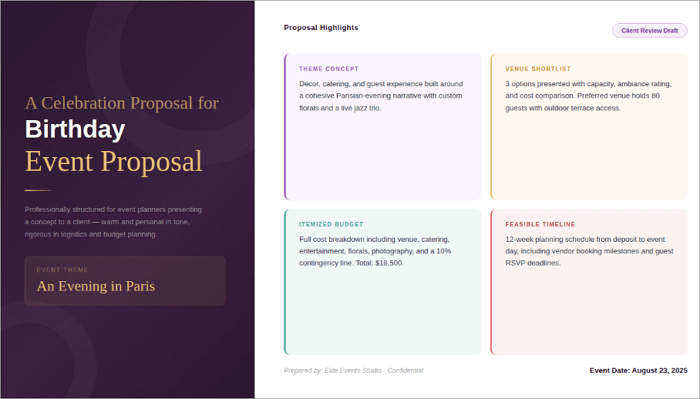
Key strengths of this proposal include:
- Theme concept around décor, catering, and guest experience
- Venue shortlist
- Itemized budget with a contingency line
- A feasible timeline
💡 Recommended AiPPT.com Template: Black and Red European and American Style Birthday Celebration PPT Template
Conclusion
Knowing how to write effective event proposals helps you secure funding, earn stakeholder trust, and also win clients for your project.
However, you should always keep your pitches as clear as possible. This signals stakeholders that you are credible, which in turn increases your chances of approval.
Choose an event proposal template from the ones we explored above, depending on your event type, and customize it to suit your goals.
Learn More About Event Planner Business Proposal
The questions below cover some of the most common scenarios event professionals face when drafting proposals.
1. How to write a proposal for an event?
Here’s how to create a strong proposal for your next event:
- Start by telling a compelling story.
- Define clear, measurable objectives of the event.
- Align those objectives with stakeholder priorities.
- Break down your budget clearly and answer possible questions.
- End with a clear call to action.
2. How to propose event sponsorship?
Check out this step-by-step process to request sponsorship:
- Open with a profile of your audience (who attends, how many, and their demographics).
- Quantify the sponsor’s brand exposure by estimating impressions, media coverage, and on-site visibility.
- Present tiered sponsorship packages such as Gold, Silver, and Bronze with specific deliverables for each level.
- Include testimonials or data from past events to prove your track record and credibility.
- Close with a clear deadline and contact information to encourage a prompt decision.
3. Is there any event proposal sample for a birthday?
Absolutely. A birthday event proposal writing sample features:
- Concept overview
- Venue selection
- Budget breakdown
- Catering preferences
- Entertainment planning
- Guest management details
For milestone birthdays such as a 50th or a sweet sixteen, the proposal may also include a theme narrative and a timeline of key moments planned throughout the event.