A graduation speech may seem quite easy to write and deliver until it’s time to actually do it. Whether you’re a student, class representative, graduate, or valedictorian, you’ll most likely feel overwhelmed when asked to speak in front of hundreds or thousands of people.
However, all you need to get started is the right graduation speech sample. Your speech doesn’t have to sound famous or overly inspirational. It just has to represent a shared experience and leave the audience with something meaningful to remember.
💡 Key Takeaways:
- Graduation speeches must have a clear message.
- Your speech becomes more relatable when you share personal stories.
- Gratitude is important, and it works best when it is specific and genuine.
- End your graduation speech with a purpose so that it sticks with the audience.
1. What Makes a Great Graduation Speech?
What really makes your speech memorable is how well it connects with the audience on a personal level, not an impressive vocabulary or famous quotes.
Here are four core elements of a great graduation ceremony speech.
- A Clear Message: Every speech should have a central idea that guides your words. It can be a feeling of pride or gratitude.
- Personal Stories and Shared Experiences: Audiences relate better to specific, real details. This could be a challenge that the class worked through together.
- Gratitude and Recognition: Your speech should acknowledge everyone who contributed to the moment, including your teachers, mentors, family, and peers.
- Hope for the Future: Help the audience feel motivated and optimistic about what comes next.

2. How to Make a Great Graduation Speech
The best way to create strong graduation speeches is by using meaningful ideas and memories. This should always come before writing, so take some time to reflect before you draft anything for your speech.
Step 1: Choose Your Main Theme
Identify a central idea that your speech will carry. Think about what has defined your graduating class most and ensure that it feels authentic to you and the group you’re speaking for.
Step 2: Gather Your Stories
Collect the memories, moments, and details that support your theme. These might come from your personal experience, things classmates have shared, or events everyone in the room will recognize.
Step 3: Build a Simple Structure
A simple pattern you can use for your speech is:
- Open with something that grabs attention.
- Develop your main idea with a story.
- Acknowledge people who helped you get here.
- Close with a forward-looking message.
Follow this and create a draft of everything. Ensure that it stays between three and five minutes long to avoid losing the audience.
Step 4: Read it Out Loud
Read and practice your draft in front of someone and ask for honest feedback. This will help you identify areas you need to work on.

3. Graduation Speech Examples for Students
Graduation speeches share the same core elements, but may vary depending on the occasion or audience. Let’s explore some examples adapted to different contexts.
1. High School Graduation Speech
Good evening. I have spent weeks searching for the right words, then realized we have already said most of them—in hallways, group chats, and late-night study sessions.
Here is what I kept coming back to: we are not the same people who walked through those doors in the first year. We came in uncertain and a little lost. Somewhere between the difficult days and the ones that made us laugh until we could not breathe, we figured it out.
Thank you to the teachers, parents, and classmates who made this feel like home.
Whatever comes next, we can handle it. Congratulations to us.

2. College Graduation Speech
I came here with a plan. Almost none of it worked out the way I expected. And I am genuinely grateful for that.
Growth rarely looks the way we always imagine. It happens in the classes you did not expect to love, the conversations that challenged your beliefs, and the moments when things fell apart, and you rebuilt from scratch. Those were certainly not detours. They were the education.
As we move into careers and lives we have not yet imagined, my advice for us all is to stay curious. The willingness to keep learning is what separates people who grow from those who get stuck.
Congratulations. The real work starts now.

3. Inspirational Graduation Speeches
In our second year, we faced a challenge that tested every one of us differently. Some were dealing with things at home, some were questioning whether they belonged, and others were simply exhausted and close to giving up.
But nobody quit. Not because we had everything figured out, but because we made a quiet, stubborn decision to take the next small step even when the bigger picture was unclear. That is what resilience actually looks like, and we experienced it first-hand.
To my classmates, we will face moments like that again, where the path is not obvious and the outcome uncertain. Remember what you already know how to do, which is taking the next step. That is enough.

4. Graduation Thanks Speech
There are a lot of people I could read to right now, but it would take longer than my time. So instead of that, I want to say something about what their support actually felt like.
To our parents and guardians, you made sacrifices that we did not always see or acknowledge. Thank you for continuing to show up anyway.
To our teachers, you gave us your time, your patience, and in many cases, your belief in us before we had it in ourselves. That matters more than you know.
And to my classmates, thank you for the honesty, the encouragement, and for making ordinary days feel like something worth remembering. We did this together, and I will not forget that.

4. Graduation Speech Openings and Closings
Often, the hardest part of writing graduation speeches is coming up with opening and closing lines, which are quite important.
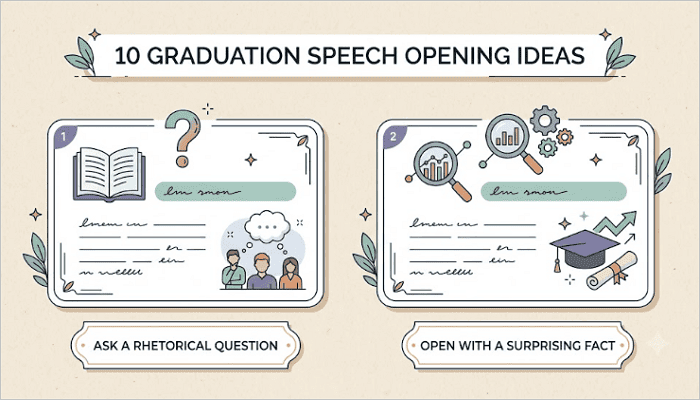
🌟 10 Graduation Speech Opening Ideas
The opening remarks for graduation ceremony set the tone and earn the audience’s attention. You can:
- Recall a specific moment the whole class experienced to make it relatable.
- Acknowledge everyone present, from graduates to families to faculty, helping you represent the institution.
- Ask a rhetorical question to help the audience reflect.
- Open with a surprising fact about your field of study or graduating year.
- Use a relevant quote and explain its significance.
- Start with a funny observation about the ceremony to relax the audience.
- Begin mid-story to create tension and make everyone curious.
- Acknowledge how much that moment means to you.
- Reference a running theme from your school years.
- State your message upfront so it settles in early.
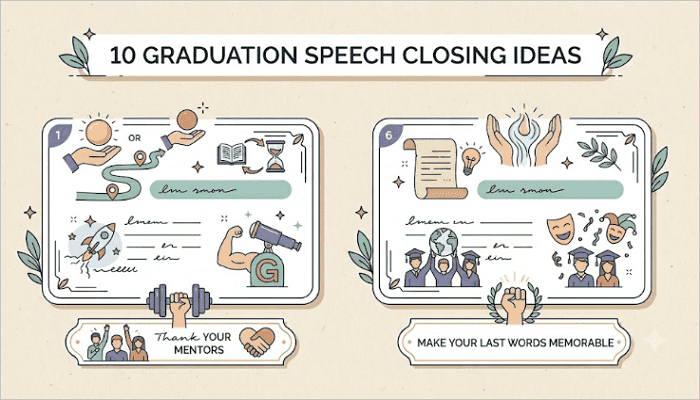
🌟 10 Graduation Speech Closing Ideas
The closing of a graduation speech is what your audience walks away with. A good ending of a speech can also directly connect with the audience, inspiring their emotions and actions. You can:
- Give the audience something specific to do or try.
- Return to your opening story to reinforce the message.
- Offer a sentence they will always remember.
- Close with a question that gives the audience something to think about.
- Name what is ending and what is beginning. For example, “This chapter is closing. The next one is yours to write.”
- Express a genuine belief in the class’s future.
- Repeat your central theme with slight variations to build rhythm.
- Thank the audience for their support.
- Close by speaking to the graduates, not about them.
- Express pride in the collective achievements of the graduating class.
Conclusion
Graduation speeches, when done well, become part of how a graduating class remembers this chapter of their lives. Even after the words fade, they never forget how the moment made them feel seen and acknowledged.
To get started, pick a graduation speech sample from the examples above and explore our opening and closing ideas to create your own speech. Most importantly, write from your heart and your own feelings.
FAQs on Graduation Ceremony Speech
Whether you’re preparing or just looking to refine your approach, these questions address the concerns speakers often have before delivering graduation speeches.
1. What should I say in my high school graduation speech?
For your high school graduation speech, pick one experience your whole class shares. Maybe it’s about growing up, staying strong, or the friendships that got you through. Use real memories to make that point.
Thank the people who helped you along the way. Then end with something honest about what comes next.
2. How to start a welcome address for graduation?
To start a welcome address for graduation:
- Acknowledge everyone present, including graduates, families, faculty, and guests.
- Briefly state the significance of the occasion.
- Introduce yourself if you’re not known by everyone in the room.
- Go into your main remarks and name the theme of the ceremony.
3. How to start a graduation speech as a student?
Here’s how a student should open a graduation speech:
- Take a moment to let the room settle before saying anything.
- Open with a meaningful quote, a question, or a brief story.
- Acknowledge classmates, teachers, and family present.
- Reference a memorable moment to make the speech relatable.
- Clearly state the main idea of your speech.