One question that often comes up when preparing a presentation, pitching a product or idea, or delivering a keynote speech is “how many words should I prepare?”
Some speakers sit down to write and have no idea whether their draft is 200 words too long or too short. As a result, their speeches may become ineffective. This is why it helps to know your speaking average words per minute.
Once you know roughly how fast you talk, it becomes easier to organize your content, avoid rushing through important points, and leave enough room to pause and engage your audience.
💡 Key Takeaways
- There is no universal perfect speaking speed for every presentation.
- Practicing aloud provides a more reliable estimate than counting your words.
- The goal of any speech is to communicate clearly rather than fit in extra information.
- Adjust your speed based on the topic and audience.
1. How Many Words Per Minute is Good in a Speech
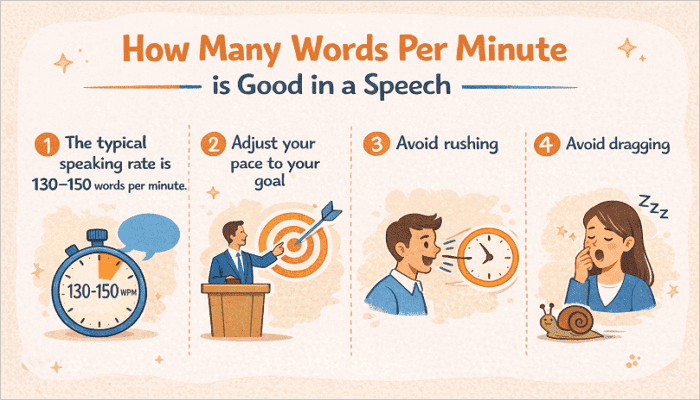
There’s no single number that works with every speech, but the average words per minute speaking range falls between 130 and 150 words. At this pace, your audience can process information without feeling overwhelmed.
The right speed, however, depends on the purpose of your speech. For example, data-heavy business presentations and emotional speeches, such as toasts or tributes, work best when you use a slower pace. A high-energy pitch with investors, on the other hand, can move a bit faster without losing the room.
Always avoid speaking too quickly, as this can make it difficult for the audience to process information, or too slowly, so you don’t lose their attention.
2. How Many Words Can You Say in a 2, 3, 5, or 10 Minute Speech?
Once you know your pace or words per minute of speech, it becomes easier to estimate how much content you can realistically include. Here’s how the word counts vary for different speech lengths.
👉 2 Minute Speech Word Count
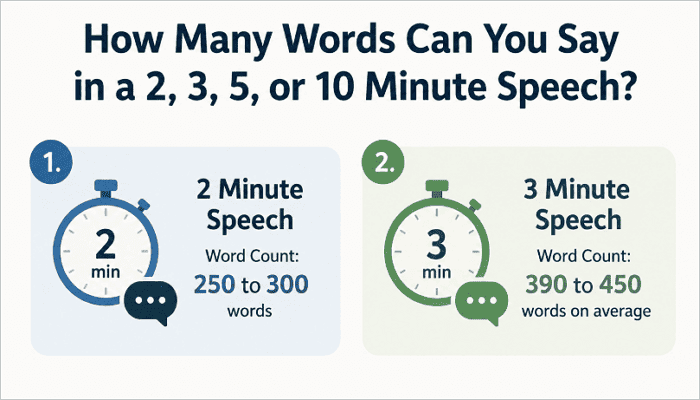
Usually, a 2-minute speech contains around 250 to 300 words.
Nevertheless, that’s a very tight window with no room for more than one idea, so resist the urge to cover multiple topics. That way, you don’t end up rushing through your content or conclusion. The format works best for introductions, quick pitches, announcements, brief presentations, or well-told stories.
👉 3 Minute Speech Word Count
A 3-minute speech is commonly around 390 to 450 words on average. Compared to the 2-minute speech, this length allows more than a single line or idea.
You can introduce the topic, present two or three supporting points, and finish with a memorable takeaway. It is ideal for short presentations, graduation speeches, and business introductions.
👉 5 Minute Speech Word Count
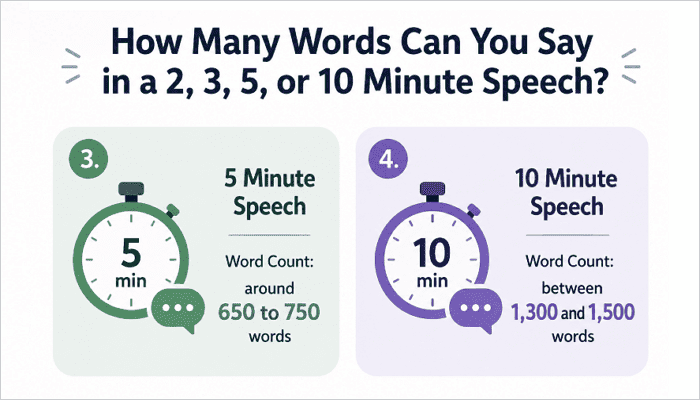
Most 5-minute speeches contain around 650 to 750 words, allowing speakers to sound more conversational rather than as though they are reading from a script. Here, you have more room to share examples, short stories, data, practical insights, and explanations.
However, you should also remember that adding more words to your speech doesn’t automatically make it stronger or more effective. Therefore, focus on giving your speech a clearer direction instead.
👉 10 Minute Speech Word Count
A 10-minute speech can comfortably accommodate between 1,300 and 1,500 words.
While the extra time allows for more detail and supporting evidence, you’d need to organize it in a clear flow to maintain the attention of your audience throughout multiple sections.
You’ll also need to use transitions such as “Let’s move on to…” or “The next point is…” to help them follow along.
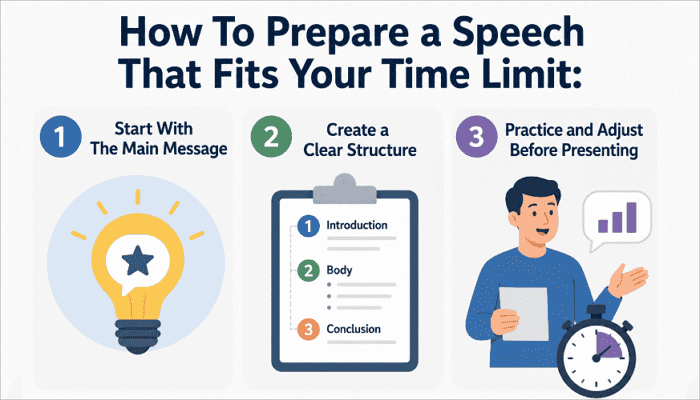
3. How To Prepare a Speech That Fits Your Time Limit
You may already know the word count target, but that’s only half the job. Let’s see how to build an effective speech around any time limit.
1. Start With The Main Message
First, decide what you want your audience to remember and develop your speech around it.
This helps prevent information overload for the audience and helps you prioritize your strongest ideas. When speakers fail to focus on what the listeners need, they lose the main point of the speech, and as a result, lose their audience.
2. Create a Clear Structure
After identifying your main point, the next step is to create a simple structure. Dividing your speech into sections also makes it easier to allocate time and adjust content without disrupting the overall flow.
The opening captures attention, the body delivers supporting points logically, and the conclusion reinforces the key takeaway in your speech.
3. Practice and Adjust Before Presenting
It’s one thing to read a script and another to actually deliver it as a speech.
Practice your speeches aloud and time yourself, so you can easily identify where the content should be shortened, expanded, or reorganized before the final presentation.
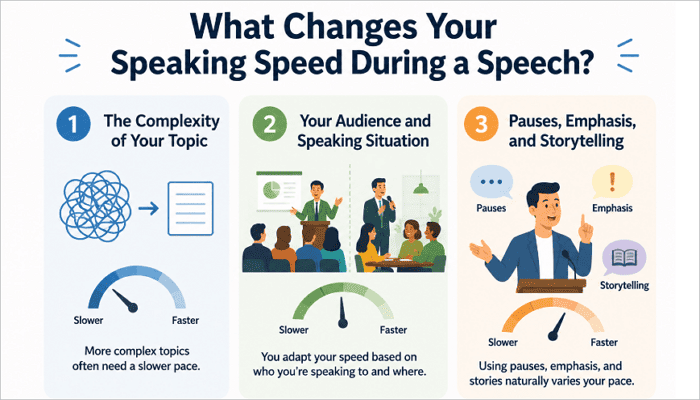
4. What Changes Your Speaking Speed During a Speech?
It is almost impossible to maintain a constant pace or talk words per minute, even as an experienced speaker. A few things may shift it in reality.
1. The Complexity of Your Topic
Complex or difficult topics involving technical terms, data, and unfamiliar concepts often need to be explained in detail and therefore require a slower delivery. For example, a short speech on a genuinely complex subject can take more time than a longer one on something simple.
2. Your Audience and Speaking Situation
Sometimes, you may need to explore different approaches for different audiences or situations. This can also influence how quickly you speak.
Executives may prefer concise presentations that include recommendations, while students might benefit from additional examples. Customer presentations, however, require more time to interact.
3. Pauses, Emphasis, and Storytelling
A strong delivery often involves more than counting the words in your speech.
- Strategic pauses allow audiences to absorb important ideas.
- Emphasis shows which words matter most.
- Storytelling creates moments of anticipation and reflection.
Conclusion
Every presentation brings its own challenges. Sometimes you’ll have too much information and too little time. Other times, you’ll struggle to use up the minutes efficiently.
While your speaking average words per minute is important, you should focus more on helping the audience understand. People remember speeches because they understood them, not because of how many words they contained.
Before your next speech, rehearse with a timer or record yourself speaking. You’ll be able to identify pacing issues and address them early.
FAQs on Average Words Per Minute Speaking
Here are a few quick answers to questions people often ask when preparing speeches, and want to know how many words per minute is good.
1. How many words is a 3-minute speech?
A 3-minute speech usually contains around 390 to 450 words. This estimate assumes an average speaking pace of approximately 130 to 150 words per minute.
However, the best way to confirm whether your script fits comfortably within this time limit is by practicing aloud or with a timer.
2. How many words are in 5 minutes of speaking?
Five minutes of speaking generally equals between 650 and 750 words. The exact number depends on pauses, emphasis, audience interaction, and your natural speaking rhythm. Speakers discussing technical topics may intentionally use fewer words.
3. How many words for a 2-minute speech?
A 2-minute speech typically includes about 250 to 300 words. Because the format is brief, focus on one clear objective and avoid introducing too many supporting points that could dilute your message.