For marketers, analysts & strategists

Customer Segmentation Presentation Templates for Clearer Strategy

Create a stakeholder-ready customer segmentation presentation in minutes. Start from a proven market research structure, then customize segment criteria, customer profiles, market size, priorities, and targeting actions.Create a customer segmentation deck in minutes. Customize profiles, sizing, priorities, and targeting actions with AI.
Browse Templates
Segment profilesMarket sizingTargeting strategy
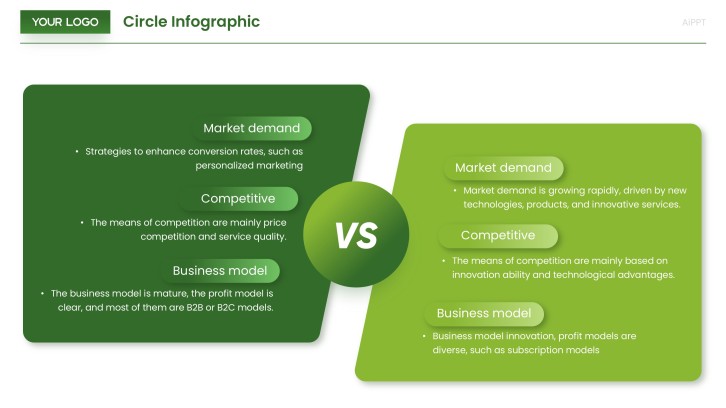
Market Research Circle Infographics
Segmentation-ready slide flow
AI-assisted strategy copy
Editable research templates
Export to PowerPoint

Related customer segmentation presentation resources

How to create a customer segmentation presentation

  1. Define the decision, audience, market, and segmentation objective.
  2. Gather customer data and choose measurable segmentation variables.
  3. Generate a structure with AI or select a research template.
  4. Customize segment profiles, sizing, comparisons, and priority actions.
  5. Verify evidence, simplify visuals, rehearse conclusions, and export.

Example sections in your customer segmentation presentation

  • Segmentation objective and data sources
  • Criteria and analytical method
  • Segment profiles and defining behaviors
  • Segment size, value, and attractiveness
  • Targeting recommendations and next steps

Choose your customer segmentation presentation format

B2C Customer Segmentation Strategy Presentation

Applicable to:

Retail brandsSubscription productsConsumer services

Build segment profiles from demographics, needs, behaviors, value, and channel preferences for a consumer strategy review.

B2B Account Segmentation and Sales Prioritization Deck

Applicable to:

SaaS teamsEnterprise salesAccount marketing

Compare accounts by firmographics, potential value, buying readiness, service needs, and sales coverage model.

RFM Customer Segmentation Analysis Presentation

Applicable to:

Ecommerce teamsLoyalty programsCRM analysis

Explain recency, frequency, and monetary groups with clear profiles, value comparisons, and retention actions.

Market Segmentation, Targeting, and Positioning Presentation

Applicable to:

Product launchesBrand strategyMarketing planning

Connect segment evidence to target selection, differentiated positioning, messaging, channels, and implementation priorities.

Example customer segmentation presentation

What makes a customer segmentation presentation effective

  • Each segment is distinct, measurable, reachable, substantial, and actionable.
  • Profiles combine evidence on needs, behaviors, value, and preferred channels.
  • Charts reveal meaningful differences instead of displaying data without interpretation.
  • Every priority segment connects to a clear business decision and next action.

Common mistakes

  • Creating too many overlapping segments that teams cannot use consistently.
  • Naming personas from assumptions without showing data sources or sample limitations.
  • Reporting segment size while ignoring value, reachability, or strategic fit.
  • Ending with profiles but no targeting, positioning, ownership, or measurement plan.

Frequently Asked Questions

Include the business objective, data sources, segmentation criteria, method, segment profiles, size and value comparisons, target priorities, and recommended actions. Show enough evidence for stakeholders to understand why each segment is distinct and useful.
Use the smallest number that captures meaningful differences and remains actionable, often three to five priority segments. The right number depends on your data, market complexity, and the team's ability to serve each group differently.
Use profile cards, bubble charts, heatmaps, comparison tables, bar charts, and perceptual maps when they clarify differences. Label the insight directly and avoid decorative charts that do not support a decision.
Lead with the decision and commercial implication, then show concise evidence for the priority segments. Connect each recommendation to expected value, required investment, ownership, and a measurable next step.
AI can help turn your objective, segment data, and recommendations into a structured first draft. Review every claim, replace sample figures with verified data, and refine the deck for your audience before presenting.
Market segmentation divides a broader market of current and potential buyers into meaningful groups. Customer segmentation usually focuses on an existing customer base, often using behavioral, transactional, needs-based, or value data.
AI Presentation Maker

Generate your customer segmentation presentation now

Turn your segmentation objective, customer evidence, profiles, and targeting recommendations into a structured presentation with AI.