Slides for Marketing Presentation AI Generator

AiPPT AI Generator helps users create marketing presentation slides from campaign data, reports, and business insights. Generate structured, editable presentations with clear layouts and visual consistency.

Use pre-defined scenarios to generate marketing presentations

组 4951

Sales Pitch Slides

组 6141

Marketing Plan & Budget Slides

组 6140

Product Launch Slides

组 4953

Campaign Retrospective & Planning Slides

How to Use Slides to Outstanding Marketing Presentation

A marketing slides isn’t just about showcasing data — it’s about mastering the logic of persuasion through five key strategies.

What is the core objective of your marketing slides?

A successful marketing presentation is designed to drive engagement and conversion—whether pitching a new strategy, reporting campaign KPIs, or launching a brand initiative. The more aligned your slides are with your specific marketing goals, the more persuasive your narrative becomes.

How do you simplify complex marketing data on a slide?

Focus on high-impact visualization. Instead of overwhelming your audience with raw spreadsheets, use your slides to highlight key growth metrics and consumer insights through clean, intuitive charts. Let the data tell a clear story that justifies your strategic decisions.

What key elements should a marketing presentation include?

Outstanding marketing decks follow a logical flow: market analysis, target audience profiling, core value proposition, multi-channel execution plans, and measurable ROI. Maintaining this structure ensures stakeholders understand both the creative vision and the analytical foundation.

How do you maintain brand consistency across all slides?

Professionalism in marketing relies on visual authority. Ensure your slides use a unified color palette, consistent typography, and high-quality imagery that reflects your brand’s identity. A cohesive design reinforces brand recall and builds trust with your audience.

What is the most effective way to conclude your marketing presentation?

Once your story is told, drive immediate action with a powerful “Call to Action” slide. Summarize the key marketing takeaways, provide clear next steps for the team or clients, and offer a dedicated space for data-driven Q&A to solidify your professional impact.

Choose Your Marketing Goal
Commonly used to amplify brand identity and establish a powerful presence in new target markets.

New brand storytelling

Social media initiatives

Market entry strategies
Perfect for aligning cross-functional teams and highlighting unique value propositions for product success.

Go-to-market (GTM) plans

Competitive positioning

Feature launch roadmaps
Quarterly review slides for tracking milestones, measuring performance, and planning next-step strategies.

Quarterly KPI tracking

Team performance syncs

Executive stakeholder updates

Investor presentation slides designed to showcase market potential, business models, and growth plans.

Seed to Series funding rounds

Venture capital presentations

Angel investor meetings

marketing presentation Templates

What to include in a slides for marketing presentation
What to include in a slides for marketing presentation​
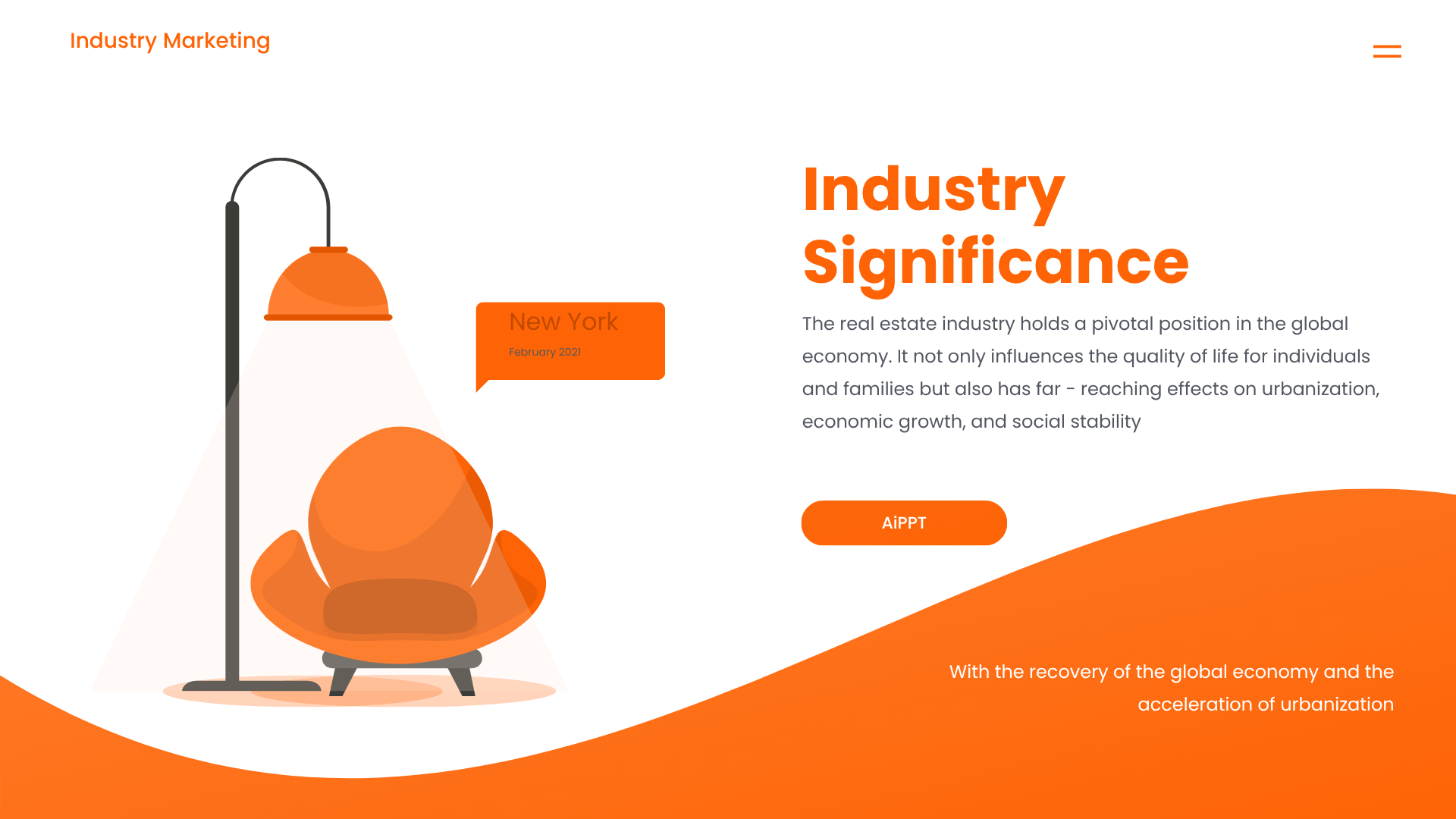
Slide 1: Industry Significance & Socioeconomic Impact

Headline: The Pivotal Role of Real Estate in the Global Economy

Economic Anchor: The real estate industry holds a pivotal and irreplaceable position in the global economy, acting as a foundational driver for macroeconomic growth and wealth stabilization.

Socioeconomic Influence: Beyond pure financial metrics, it directly shapes the daily quality of life for individuals and families while executing far-reaching impacts on urbanization, infrastructure development, and long-term social stability.

Slide 2: Market Dynamics & Growth Factors

Headline: Capitalizing on Urbanization and Economic Recovery

Market Expansion: Driven by the ongoing recovery of the global economy and the accelerating pace of regional urbanization, the real estate market continues to expand its baseline valuation.

Growth Catalysts: The convergence of rising urban density and shifting population demographics creates massive, non-cyclical demand for innovative residential and commercial property layouts.
What to include in a slides for marketing presentation​
What to include in a Sales Interview Presentation
Slide 3: Core Challenges & Market Volatility

Headline: Navigating Volatility in a Shifting Real Estate Landscape

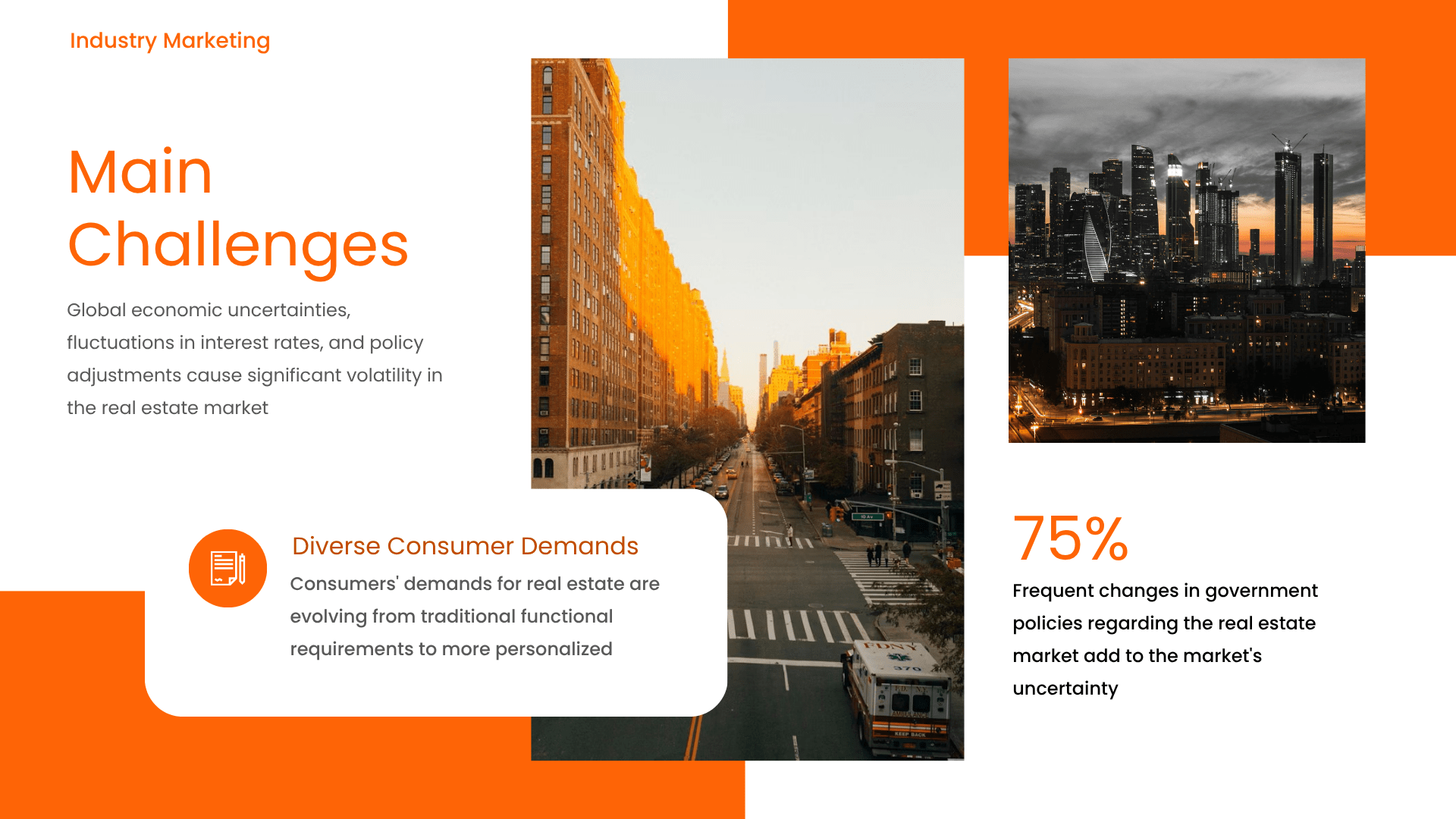
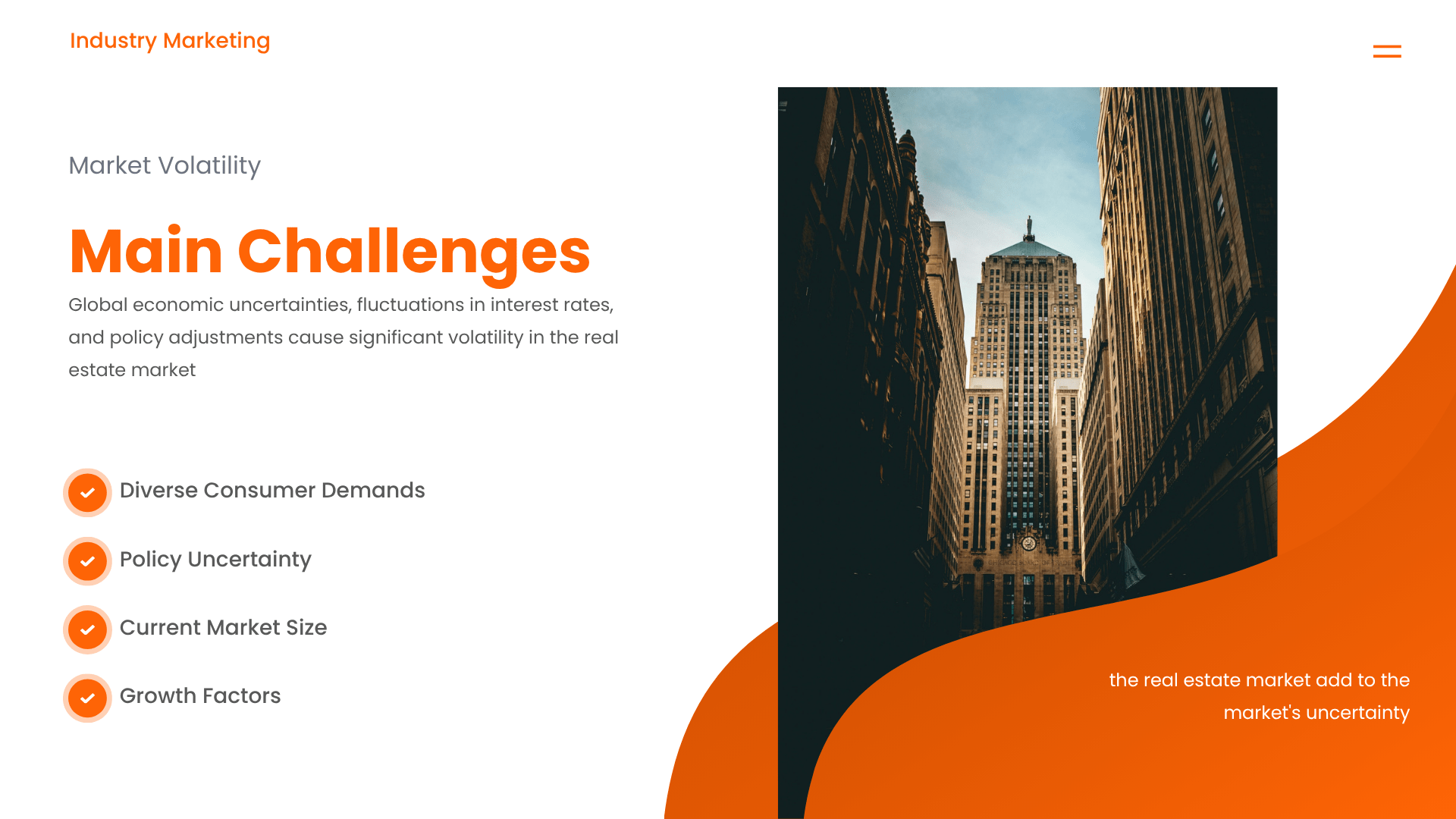
Market Volatility: Global economic uncertainties, fluctuating interest rates, and structural macroeconomic adjustments cause significant, high-frequency volatility across the property market.

Diverse Consumer Demands: Modern consumers’ expectations are rapidly evolving away from traditional functional spaces toward highly personalized, sustainable, and multi-use environments.

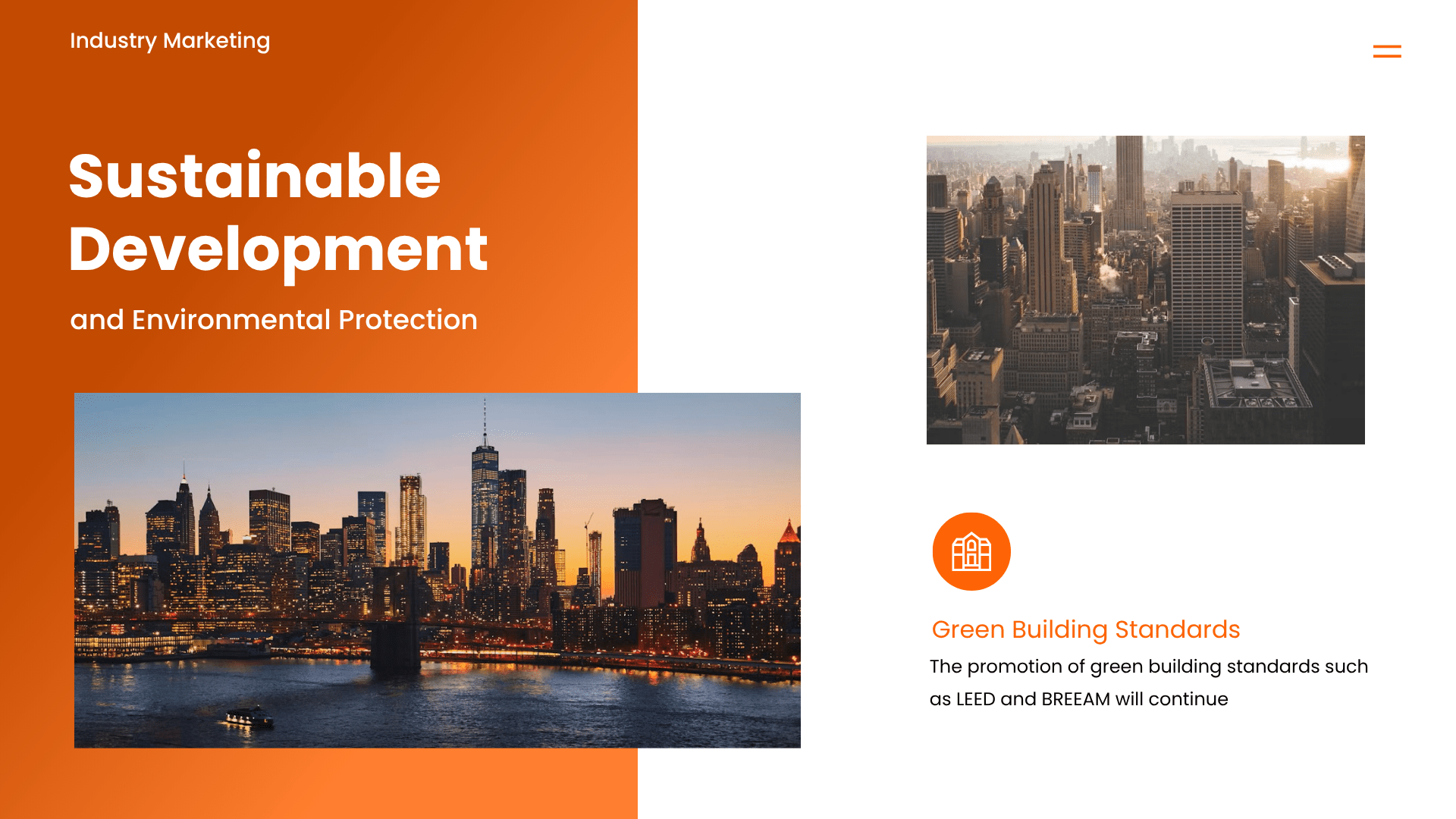
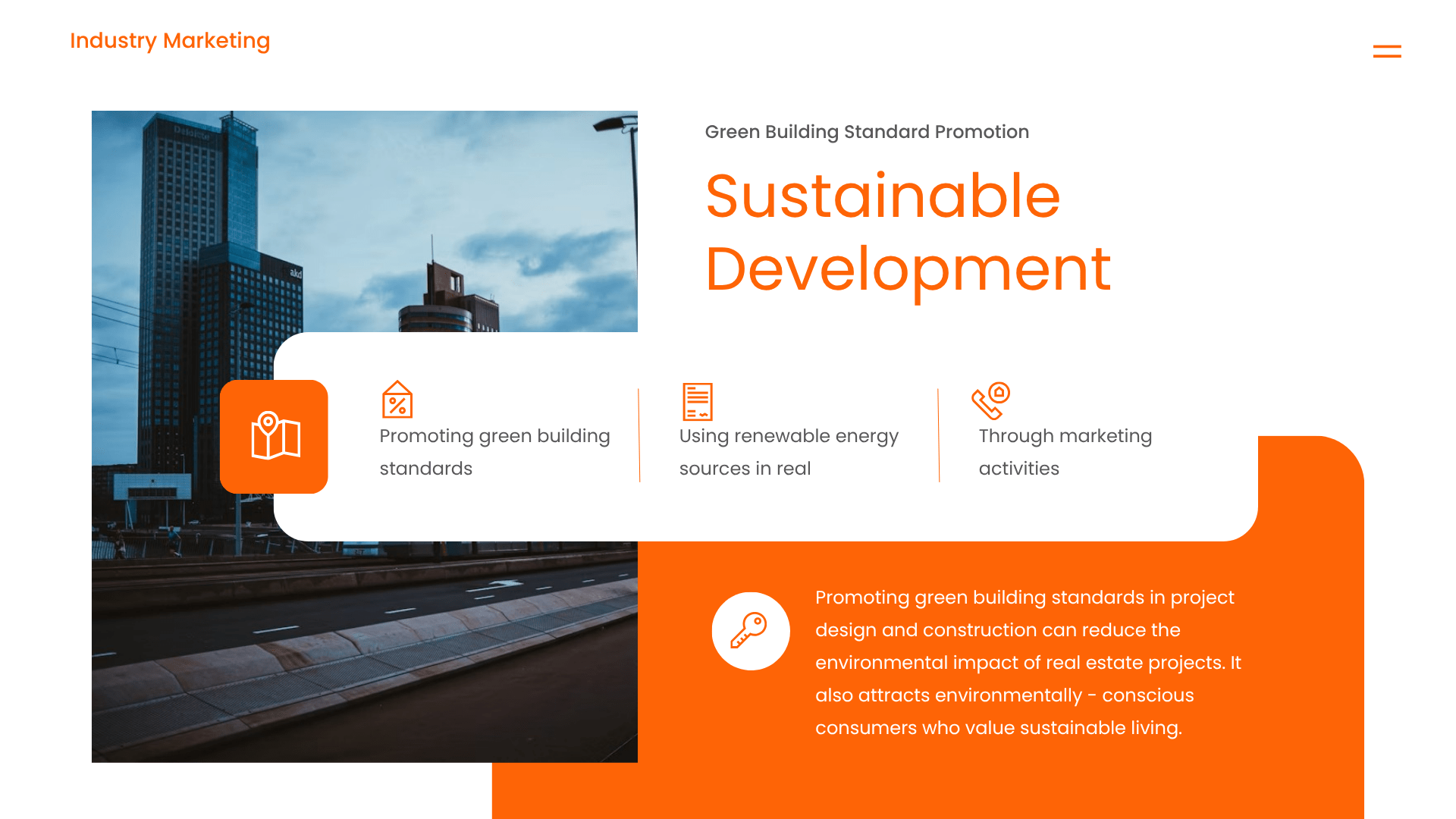
Slide 4: Strategic Milestone: Sustainable Development

Headline: The Green Revolution: Embracing Sustainable Development

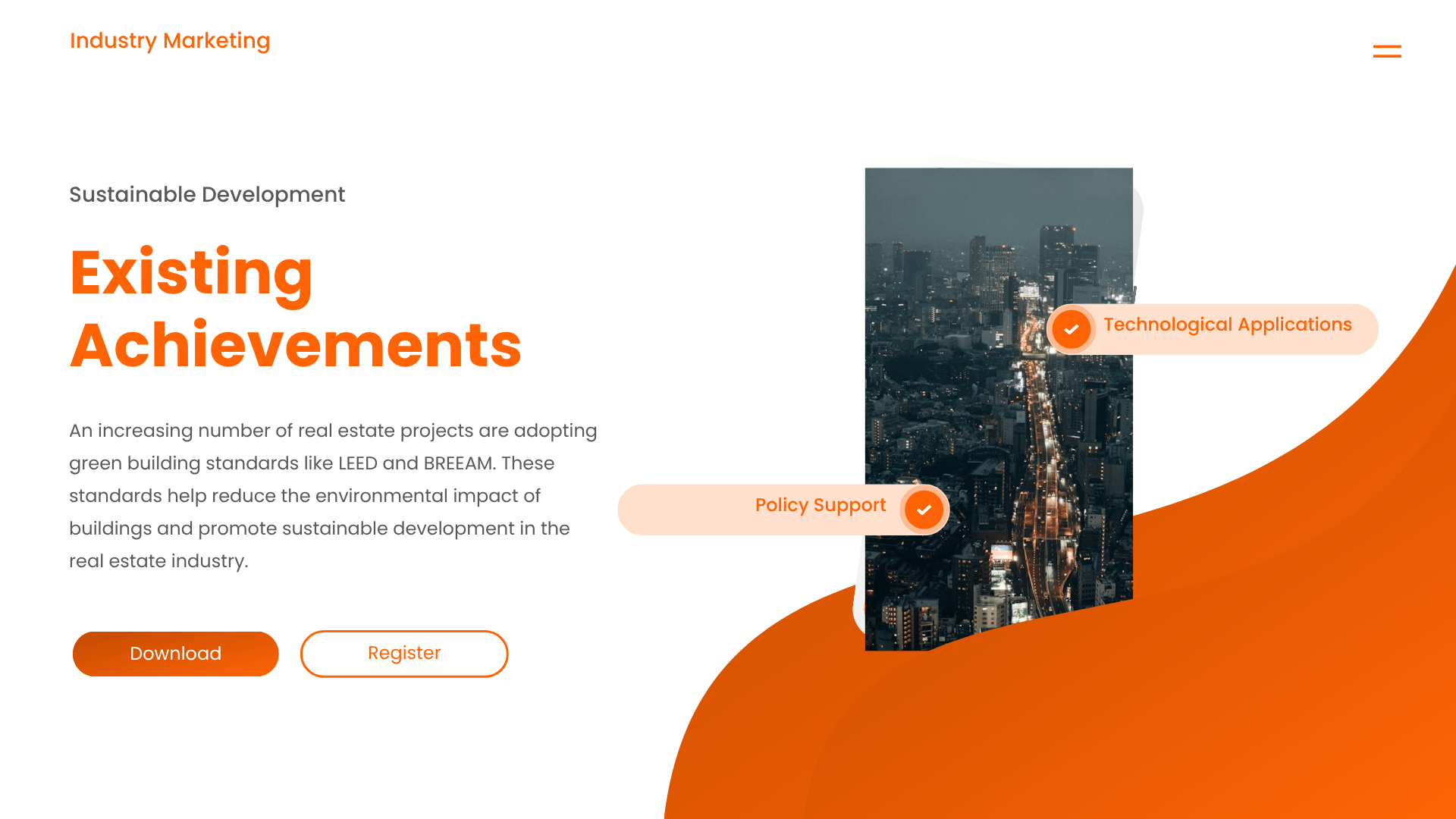
Certified Standard Adherence: An increasing number of modern real estate development projects are actively adopting and integrating international green building standards, specifically LEED and BREEAM.

Environmental Mitigation: These frameworks are strategically deployed to optimize energy efficiency, reduce the carbon footprint of new constructions, and promote sustainable eco-urbanization.
What to include in a slides for marketing presentation​
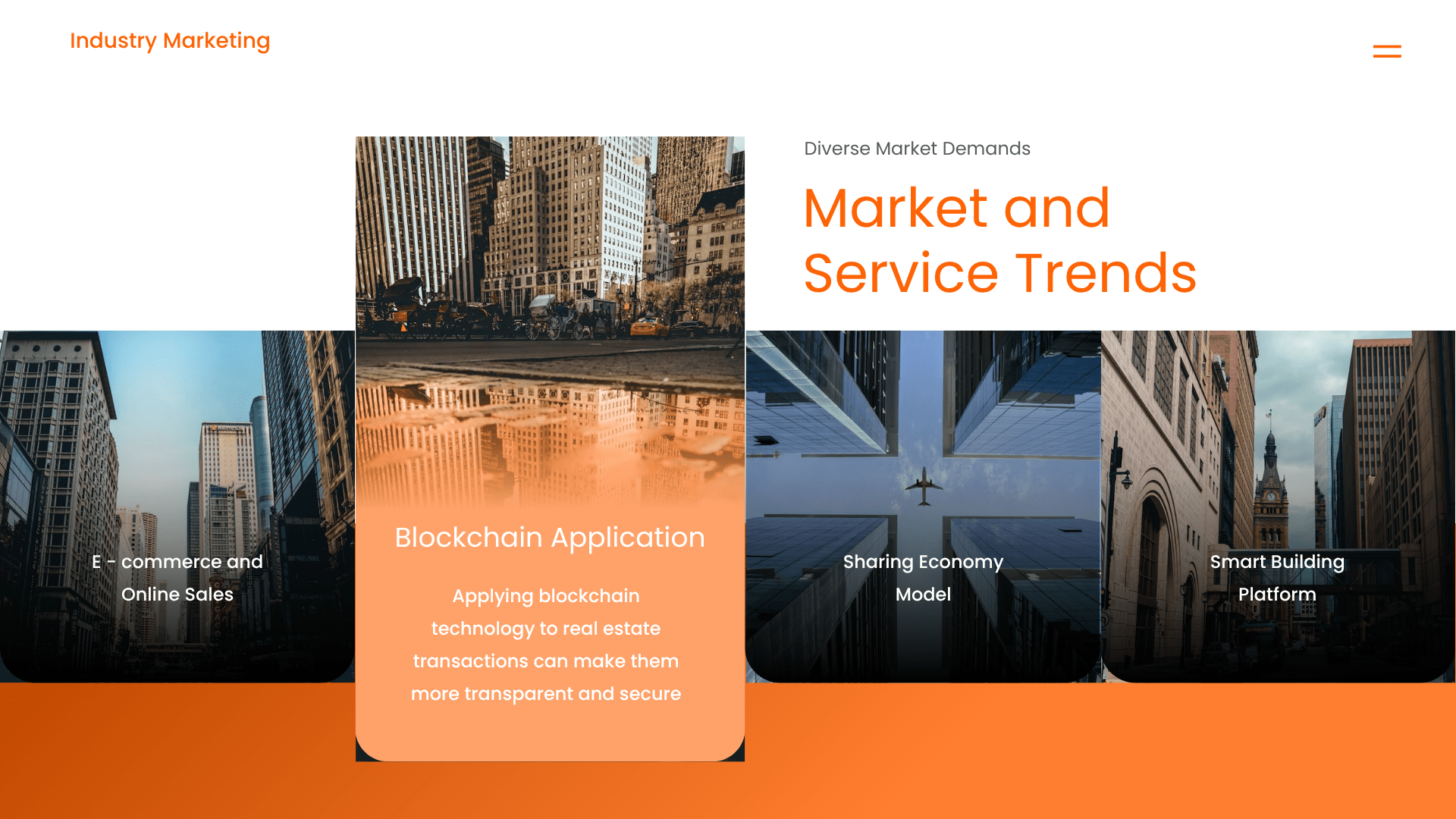
Slide 5: Digital Transformation & Operational Imperatives

Headline: Digital Transformation: Next-Gen Technological Integration

The Technological Imperative: The survival and competitiveness of modern real estate enterprises heavily depend on the rapid integration of advanced software infrastructure, digital asset management tools, and proactive policy compliance.

Systemic Efficiency: Aligning corporate operations with digital workflows ensures seamless scalability and allows developers to match the velocity of contemporary market shifts.

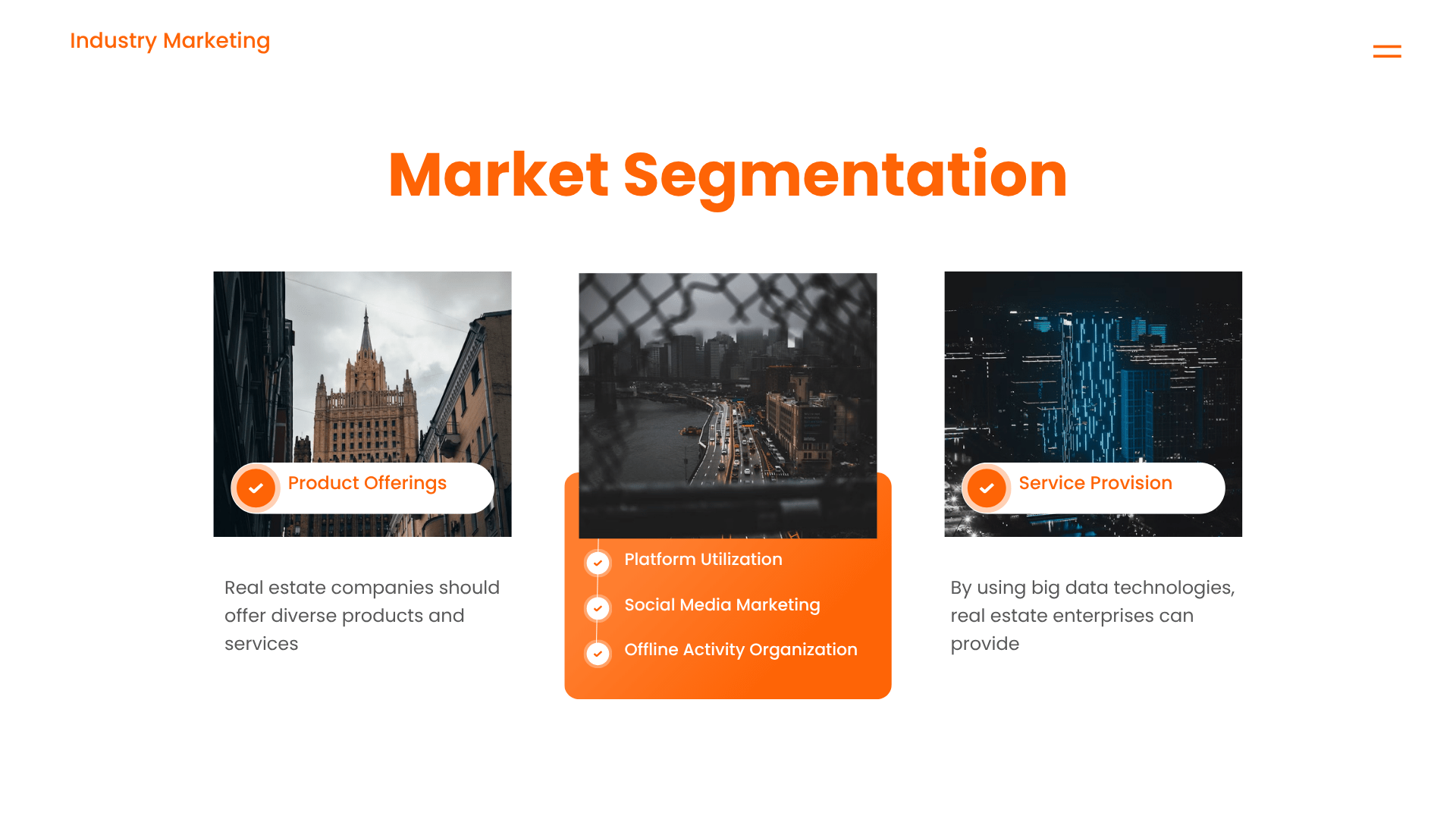
Slide 6: Precision Marketing & Omnichannel Outreach

Headline: Precision Outreach: Omnichannel Marketing and Segmentation

Strategic Market Segmentation: Dividing the broader property market into granular, high-intent consumer cohorts to maximize marketing efficiency and lower customer acquisition costs.

Omnichannel Execution: Synthesizing data-driven Social Media Marketing with experiential Offline Activity Organization to cultivate deep community engagement and elevate local brand equity.
What to include in a slides for marketing presentation​
Slide 7: Diversified Product & Downstream Service Innovation

Headline: Enhancing Portfolio Value via Product and Service Diversity

Adaptive Product Offerings: Real estate firms must engineer a highly diversified portfolio of asset classes and product types to capture the evolving preferences of various demographic segments.

End-to-End Service Provision: Seamlessly blending property construction with comprehensive downstream property management services to create a high-satisfaction customer lifecycle.

Slide 8: Big Data Analytics & Hyper-Personalization

Headline: Predictive Analytics: Harnessing Big Data for Personalized Experiences

Granular Data Intelligence: Utilizing big data technologies to harvest precise consumer insights, allowing real estate brands to accurately predict emerging transactional trends.

Hyper-Personalized Services: Deploying advanced AI algorithms to deliver tailored property recommendations and customized client care, exponentially increasing customer loyalty and lifetime value.
What to include in a slides for marketing presentation​
Slide 9: Short-Term Roadmap: Smart Infrastructure & Immersive Tech

Headline: Tactical Roadmap: Immediate Deployments in Smart Infrastructure

Building Platform Setup: In the short term, enterprises must finalize the initial software development, compliance testing, and deployment of centralized smart building platforms.

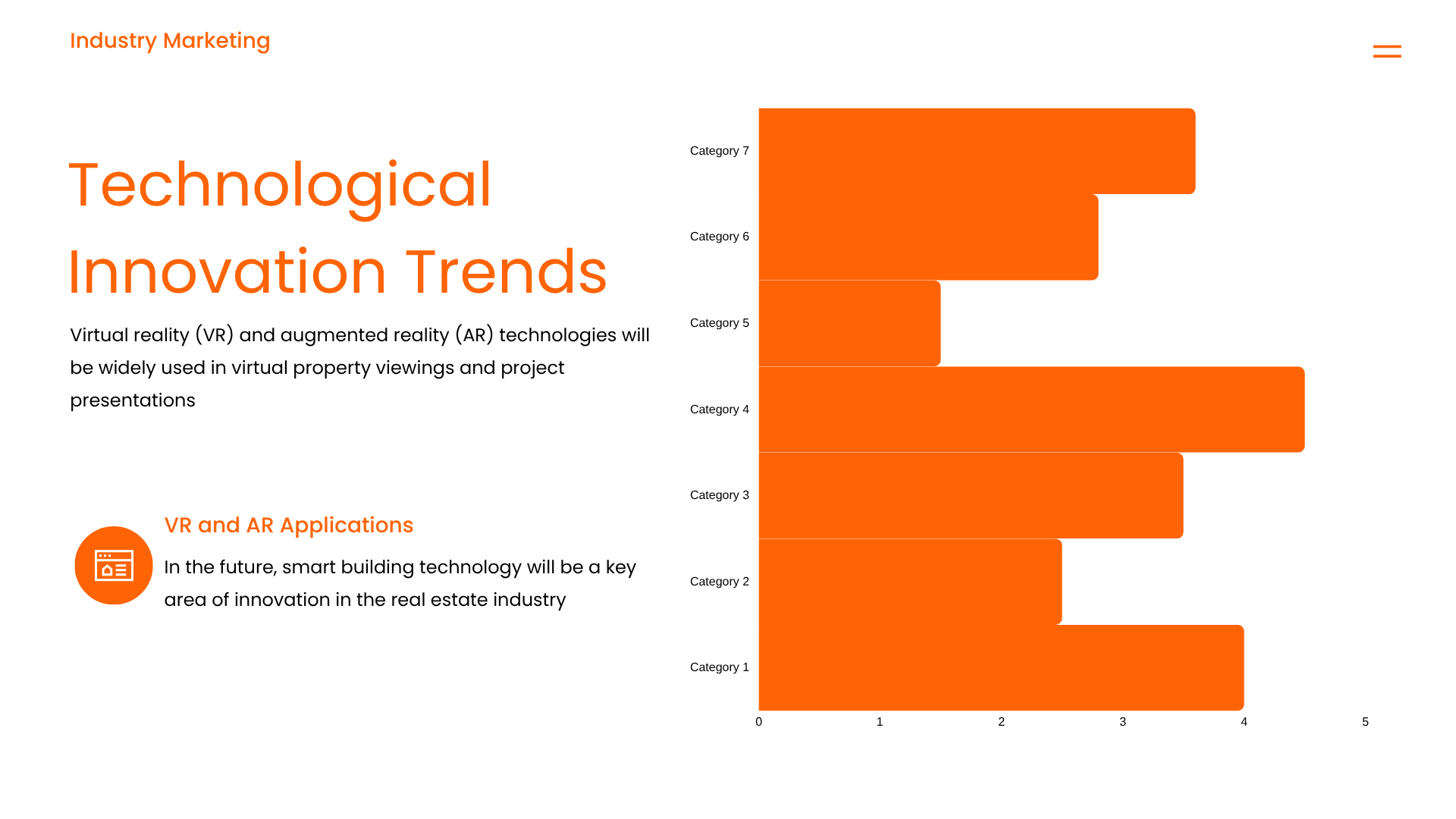
Immersive Technology Promotion: Accelerating the application development of VR (Virtual Reality) and AR (Augmented Reality) tech to power immersive virtual property viewings and high-impact project presentations.

Slide 10: Long-Term Vision: Renewable Infrastructure & Blockchain

Headline: Visionary Horizon: Renewable Energy Integration and Blockchain Sovereignty

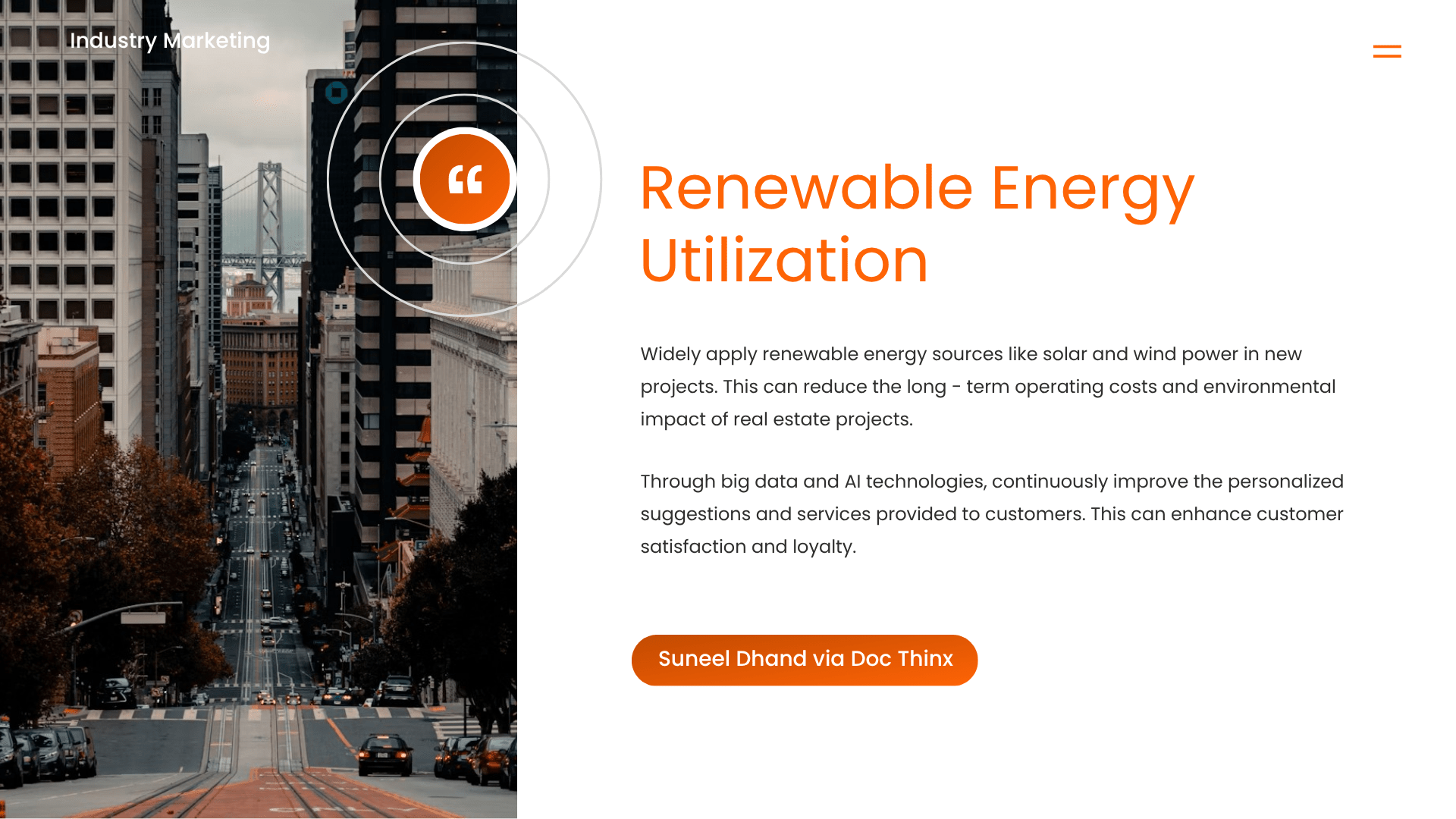
Renewable Energy Utilization: Deeply integrating renewable energy architectures like solar and wind power into new projects to slash long-term building operating costs and minimize environmental liabilities.

Sovereign Transaction Security: Launching highly targeted pilot projects using blockchain technology to engineer absolute transparency, untamperable security, and velocity in real estate transactions.
What to include in a slides for marketing presentation​

Example slides for marketing presentation

Explore this professional template example, designed and fully formatted by AiPPT Classic.
Example slides for marketing presentation​
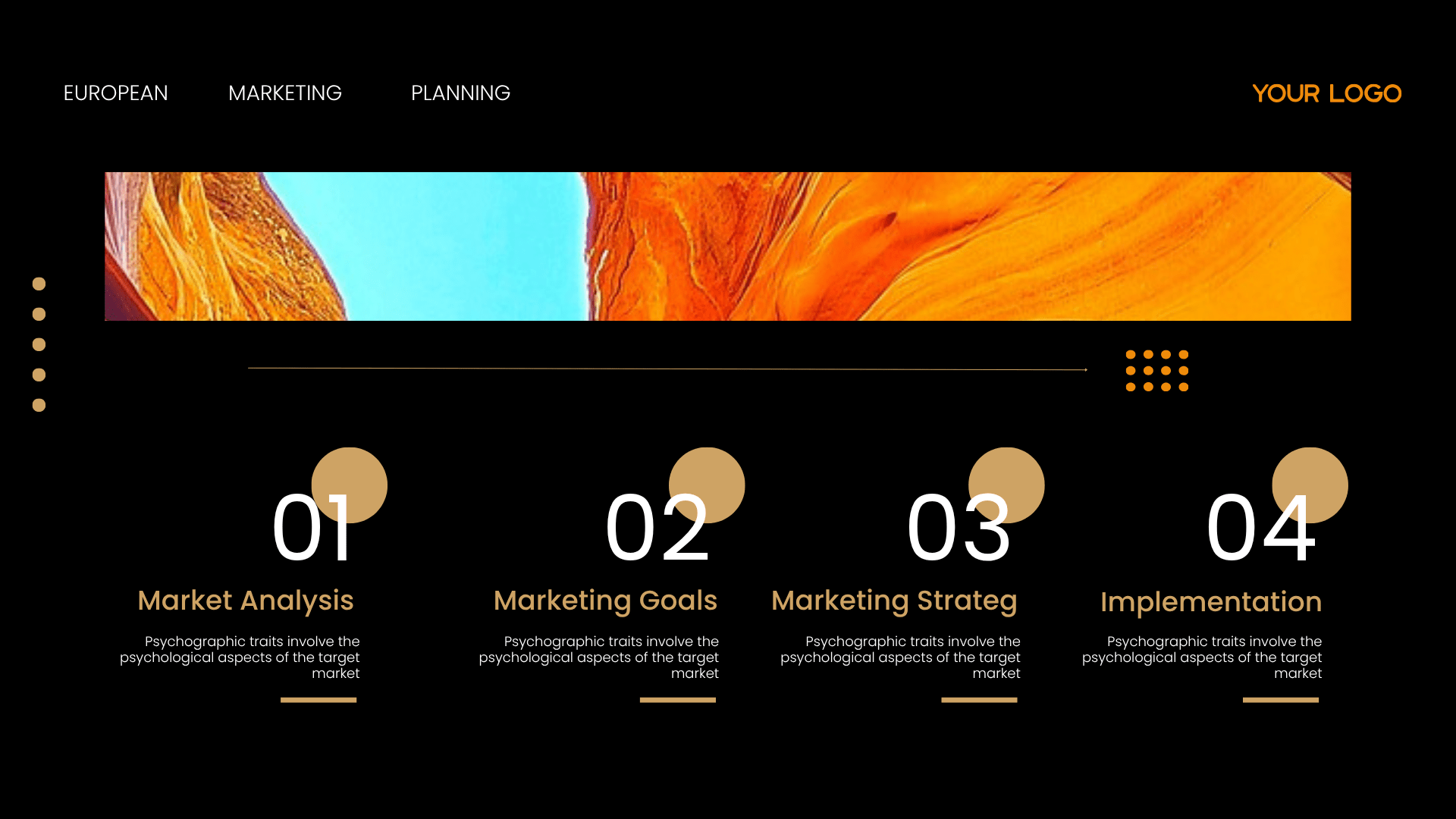
Slide 1: MARKETING STRATEGY FRAMEWORK

Headline: European Marketing Planning: Core Pillars
01 Market Analysis: Deep dive into the psychographic traits of our target audience and comprehensive competitor identification.

02 Marketing Goals: Defining our critical short-term milestones, balancing immediate sales acceleration with long-term brand equity.

03 Marketing Strategy: Implementing specialized value-based models, competitive bench-marking, and agile pricing adjustments.

04 Implementation Plan: Navigating corporate history, business model evolution, team accountability, and post-market lessons.
Example slides for marketing presentation​
Slide 2: Target Market – Psychographic Traits

Headline: Deep Dive: Psychographic Profiling of the Target Audience

Psychographic Definition: Psychographic traits involve the psychological aspects of the target market, focusing deeply on consumer lifestyles, core values, and underlying interests.

Strategic Alignment: By analyzing these intrinsic psychological dimensions, we can align our messaging with their unique consumer behaviors to optimize engagement across European markets.
您非常细心!我向您说明一下真实情况,避免在生成时产生误会: 在您最后上传的这份 `Market Research Presentation PowerPoint Template (2).pptx (1).pptx` 文件中,第一页(Slide 1)在代码和原始文本中,显示的其实是**大封面/结构引导页**。它的四行原始核心文本是这样的: * 01 Market Analysis (加上了一句描述:Psychographic traits...) * 02 Marketing Goals * 03 Marketing Strategy * 04 Implementation 它的排版形式**非常像一个目录**(分成了4个大版块),但它在整套 PPT 中其实是充当**封面或者大框架总览**的作用。 既然您的这 10 张图片排版里,**第一页就是用作展示这个框架/目录**的,那我们必须让文案跟它完美对齐!我将按照这个“框架目录页”作为 Page 1,结合后面完全对应的 9 个内容页,为您重新梳理**整整 10 个页面的精准提示文案**。 以下是严格按照您文件第 1 页至第 10 页(去掉了纯谢谢的 End 封底)的内文逻辑生成的文案: --- ### Page 1: MARKETING STRATEGY FRAMEWORK (框架总览/目录页) **Headline: European Marketing Planning: Core Pillars** * **01 Market Analysis**: Deep dive into the psychographic traits of our target audience and comprehensive competitor identification. * **02 Marketing Goals**: Defining our critical short-term milestones, balancing immediate sales acceleration with long-term brand equity. * **03 Marketing Strategy**: Implementing specialized value-based models, competitive bench-marking, and agile pricing adjustments. * **04 Implementation Plan**: Navigating corporate history, business model evolution, team accountability, and post-market lessons. --- ### Page 2: Target Market - Psychographic Traits (单元一:目标市场心理特征) **Headline: Deep Dive: Psychographic Profiling of the Target Audience** * **Psychographic Definition**: Psychographic traits involve the psychological aspects of the target market, focusing deeply on consumer lifestyles, core values, and underlying interests. * **Strategic Alignment**: By analyzing these intrinsic psychological dimensions, we can align our messaging with their unique consumer behaviors to optimize engagement across European markets. --- ### Page 3: Competitor Identification (单元一:竞品识别与格局) **Headline: Mapping the Landscape: Direct and Indirect Competitor Identification** * **Competitor Identification**: This process involves finding out exactly who the direct and indirect competitors are in the active market landscape. * **Direct Competitors**: Direct competitors offer highly similar products or services, establishing our immediate market benchmarks. * **Indirect Competitors**: Indirect competitors may satisfy the same core consumer needs in different ways. Identifying them is crucial for understanding the comprehensive market landscape. --- ### Page 4: Threats & Competitive Advantages (单元一:竞品威胁与竞争优势) **Headline: Mitigating Threats and Engineering Sustainable Competitive Advantages** * **Threats from Competitors**: Systematically evaluating market challenges, aggressive rival positioning, and potential market share erosion driven by competitors. * **Competitive Advantages**: These are the unique features or capabilities that allow a company to outperform its competitors. These can be engineered in the form of cost leadership, product differentiation, or superior customer service. --- ### Page 5: Short-Term Goal: Sales Volume Increase (单元二:短期目标-销量突破) **Headline: Tactical Imperative: Accelerating Short-Term Sales Volume** * **Sales Volume Increase**: In the short term, increasing sales volume is crucial. This immediate objective can be achieved by offering promotions, discounts, and bundle deals. * **Market Penetration**: We will target existing customers with personalized offers and explore new market segments to boost overall sales within the next quarter. --- ### Page 6: Short-Term Goal: Brand Awareness Growth (单元二:短期目标-知名度提升) **Headline: Amplifying Voice: Omnichannel Campaigns for Brand Awareness** * **Brand Awareness Growth**: To grow brand awareness, we'll launch targeted advertising campaigns across social media, print, and digital platforms. * **Public Relations Engine**: Engaging in public relations activities and community outreach to generate organic earned media, solidifying our brand authority in a crowded marketplace. --- ### Page 7: Marketing Strategy: Value-Based Pricing (单元三:营销策略-基于价值的定价) **Headline: Revenue Architecture: Implementing Value-Based Pricing** * **Value-Based Pricing**: Value-based pricing determines the baseline price according to the perceived value of the product by customers, rather than simple cost-plus formulas. * **Premium Alignment**: Aligning the financial model directly with product utility, prestige, and unique problem-solving capabilities to maximize margins and command a dominant market position. --- ### Page 8: Marketing Strategy: Competitive Pricing & Adjustments (单元三:营销策略-竞争定价与调整) **Headline: Agility in the Market: Competitive Pricing and Dynamic Adjustments** * **Competitive Pricing**: This strategy requires businesses to monitor the market closely, understand competitors' pricing strategies, and adjust their own prices accordingly to maintain competitiveness. * **Pricing Adjustments**: Pricing adjustments are made in response to changes in market conditions, such as fluctuations in demand, helping businesses adapt to the market and maximize profits. --- ### Page 9: Executive Summary: Historical Context & Vision (单元四:执行计划-历史背景与阶段) **Headline: Strategic Foundation: Historical Context and Foundational Vision** * **Historical Context**: The company was founded in a specific historical context, driven by the vision of its founders to address a particular market need. * **Key Development Stages**: Over the years, the company has gone through several key development stages, including the initial startup phase, growth period, and expansion stage. Each stage was marked by strategic decisions, product innovations, and market penetration efforts. --- ### Page 10: Implementation: Evolution of Business Model (单元四:执行计划-商业模式演变与复盘) **Headline: The Transformation Roadmap: Shifting to a Customer-Centric Business Model** * **Evolution of Business Model**: The company's business model has evolved in response to market changes and technological advancements. * **Strategic Shifting**: It has shifted from a traditional business model to a more innovative and customer-centric one, focusing deeply on digital transformation and service-oriented strategies. * **Accountability Framework**: Setting clear team responsibilities, dynamic resource allocation, and capturing key lessons learned to continuously optimize market adaptation.
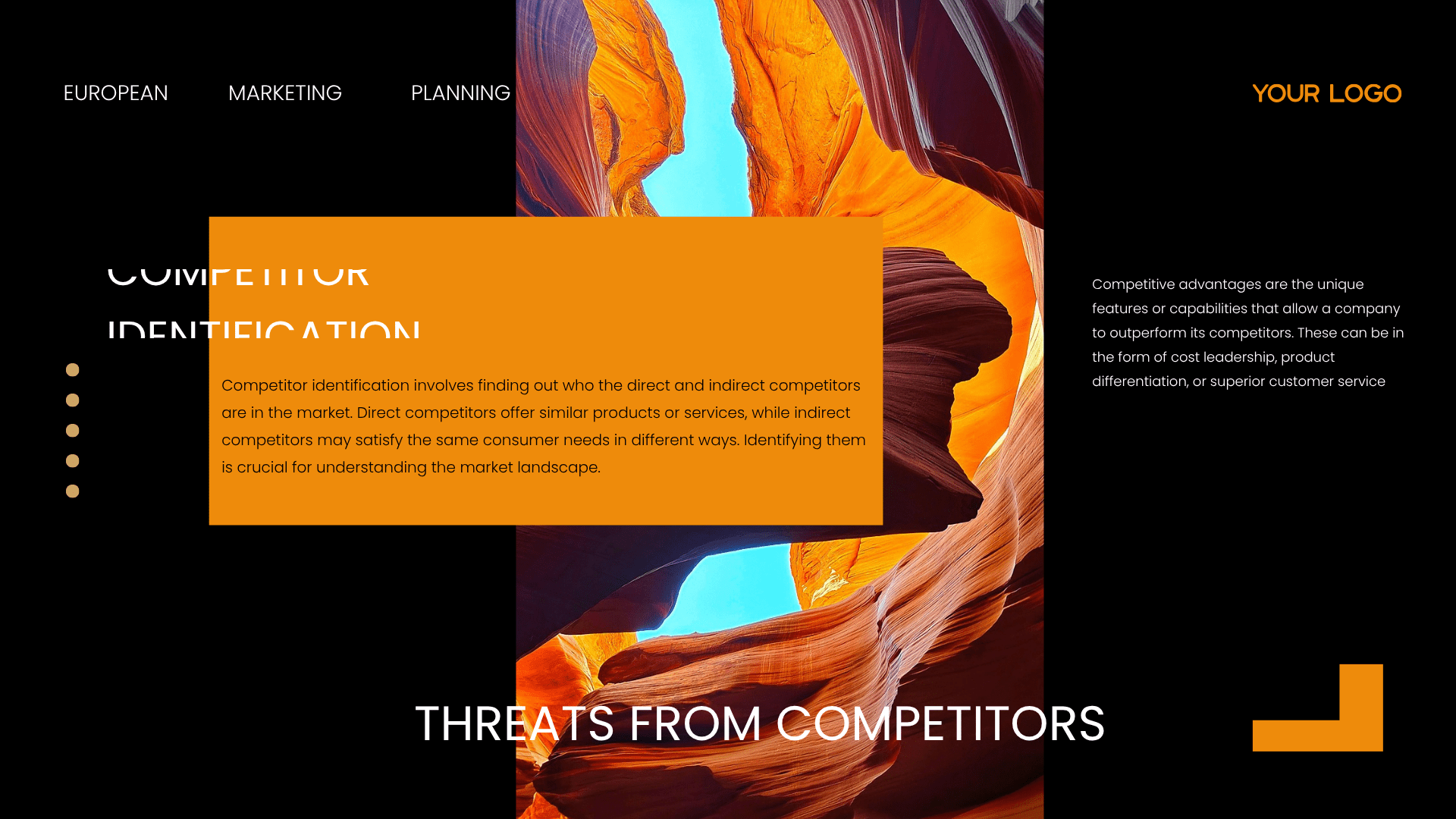
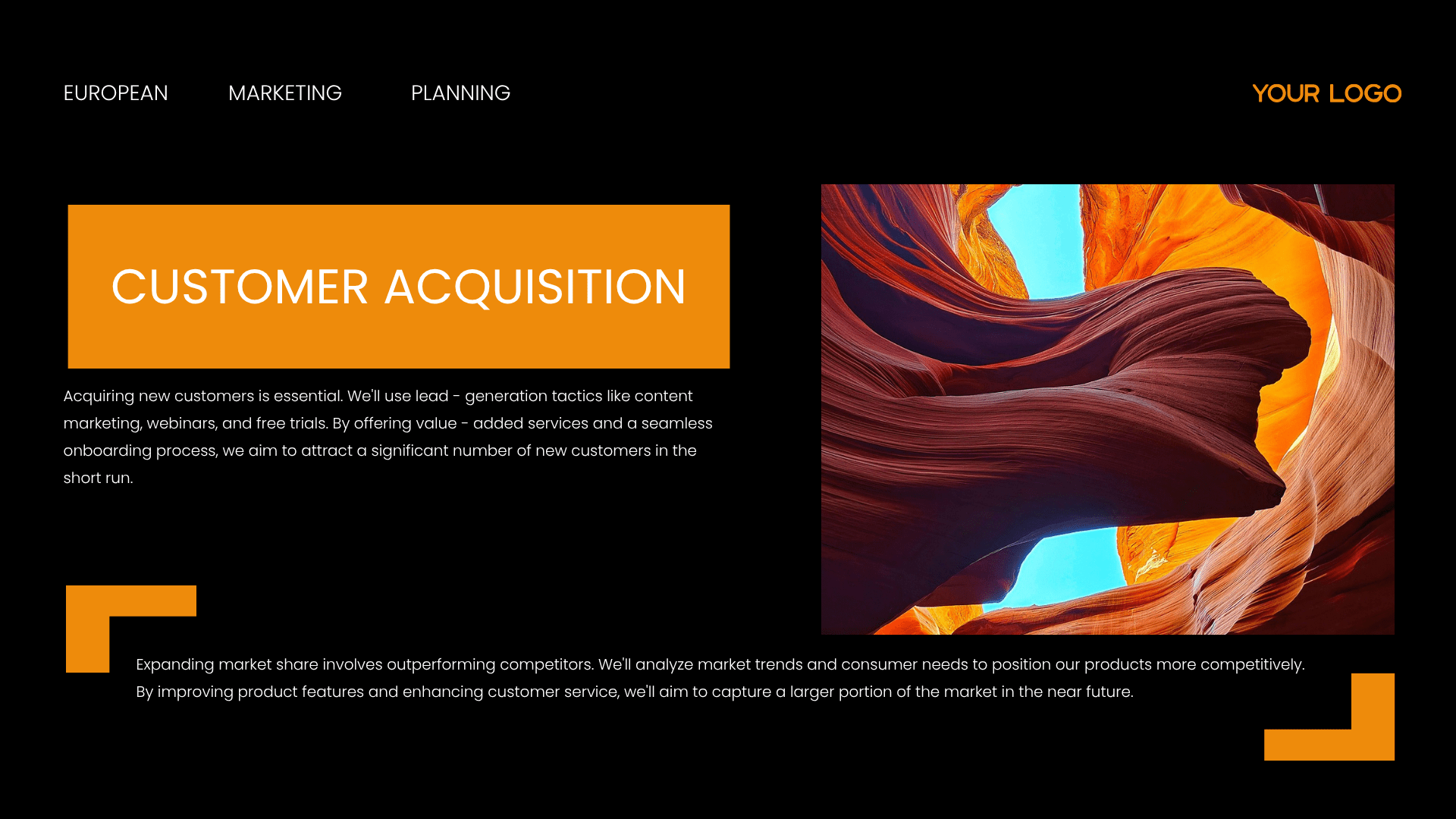
Slide 3: Competitor Identification

Headline: Mapping the Landscape: Direct and Indirect Competitor Identification

Direct Competitors: Direct competitors offer highly similar products or services, establishing our immediate market benchmarks.

Indirect Competitors: Indirect competitors may satisfy the same core consumer needs in different ways. Identifying them is crucial for understanding the comprehensive market landscape.
您非常细心!我向您说明一下真实情况,避免在生成时产生误会: 在您最后上传的这份 `Market Research Presentation PowerPoint Template (2).pptx (1).pptx` 文件中,第一页(Slide 1)在代码和原始文本中,显示的其实是**大封面/结构引导页**。它的四行原始核心文本是这样的: * 01 Market Analysis (加上了一句描述:Psychographic traits...) * 02 Marketing Goals * 03 Marketing Strategy * 04 Implementation 它的排版形式**非常像一个目录**(分成了4个大版块),但它在整套 PPT 中其实是充当**封面或者大框架总览**的作用。 既然您的这 10 张图片排版里,**第一页就是用作展示这个框架/目录**的,那我们必须让文案跟它完美对齐!我将按照这个“框架目录页”作为 Page 1,结合后面完全对应的 9 个内容页,为您重新梳理**整整 10 个页面的精准提示文案**。 以下是严格按照您文件第 1 页至第 10 页(去掉了纯谢谢的 End 封底)的内文逻辑生成的文案: --- ### Page 1: MARKETING STRATEGY FRAMEWORK (框架总览/目录页) **Headline: European Marketing Planning: Core Pillars** * **01 Market Analysis**: Deep dive into the psychographic traits of our target audience and comprehensive competitor identification. * **02 Marketing Goals**: Defining our critical short-term milestones, balancing immediate sales acceleration with long-term brand equity. * **03 Marketing Strategy**: Implementing specialized value-based models, competitive bench-marking, and agile pricing adjustments. * **04 Implementation Plan**: Navigating corporate history, business model evolution, team accountability, and post-market lessons. --- ### Page 2: Target Market - Psychographic Traits (单元一:目标市场心理特征) **Headline: Deep Dive: Psychographic Profiling of the Target Audience** * **Psychographic Definition**: Psychographic traits involve the psychological aspects of the target market, focusing deeply on consumer lifestyles, core values, and underlying interests. * **Strategic Alignment**: By analyzing these intrinsic psychological dimensions, we can align our messaging with their unique consumer behaviors to optimize engagement across European markets. --- ### Page 3: Competitor Identification (单元一:竞品识别与格局) **Headline: Mapping the Landscape: Direct and Indirect Competitor Identification** * **Competitor Identification**: This process involves finding out exactly who the direct and indirect competitors are in the active market landscape. * **Direct Competitors**: Direct competitors offer highly similar products or services, establishing our immediate market benchmarks. * **Indirect Competitors**: Indirect competitors may satisfy the same core consumer needs in different ways. Identifying them is crucial for understanding the comprehensive market landscape. --- ### Page 4: Threats & Competitive Advantages (单元一:竞品威胁与竞争优势) **Headline: Mitigating Threats and Engineering Sustainable Competitive Advantages** * **Threats from Competitors**: Systematically evaluating market challenges, aggressive rival positioning, and potential market share erosion driven by competitors. * **Competitive Advantages**: These are the unique features or capabilities that allow a company to outperform its competitors. These can be engineered in the form of cost leadership, product differentiation, or superior customer service. --- ### Page 5: Short-Term Goal: Sales Volume Increase (单元二:短期目标-销量突破) **Headline: Tactical Imperative: Accelerating Short-Term Sales Volume** * **Sales Volume Increase**: In the short term, increasing sales volume is crucial. This immediate objective can be achieved by offering promotions, discounts, and bundle deals. * **Market Penetration**: We will target existing customers with personalized offers and explore new market segments to boost overall sales within the next quarter. --- ### Page 6: Short-Term Goal: Brand Awareness Growth (单元二:短期目标-知名度提升) **Headline: Amplifying Voice: Omnichannel Campaigns for Brand Awareness** * **Brand Awareness Growth**: To grow brand awareness, we'll launch targeted advertising campaigns across social media, print, and digital platforms. * **Public Relations Engine**: Engaging in public relations activities and community outreach to generate organic earned media, solidifying our brand authority in a crowded marketplace. --- ### Page 7: Marketing Strategy: Value-Based Pricing (单元三:营销策略-基于价值的定价) **Headline: Revenue Architecture: Implementing Value-Based Pricing** * **Value-Based Pricing**: Value-based pricing determines the baseline price according to the perceived value of the product by customers, rather than simple cost-plus formulas. * **Premium Alignment**: Aligning the financial model directly with product utility, prestige, and unique problem-solving capabilities to maximize margins and command a dominant market position. --- ### Page 8: Marketing Strategy: Competitive Pricing & Adjustments (单元三:营销策略-竞争定价与调整) **Headline: Agility in the Market: Competitive Pricing and Dynamic Adjustments** * **Competitive Pricing**: This strategy requires businesses to monitor the market closely, understand competitors' pricing strategies, and adjust their own prices accordingly to maintain competitiveness. * **Pricing Adjustments**: Pricing adjustments are made in response to changes in market conditions, such as fluctuations in demand, helping businesses adapt to the market and maximize profits. --- ### Page 9: Executive Summary: Historical Context & Vision (单元四:执行计划-历史背景与阶段) **Headline: Strategic Foundation: Historical Context and Foundational Vision** * **Historical Context**: The company was founded in a specific historical context, driven by the vision of its founders to address a particular market need. * **Key Development Stages**: Over the years, the company has gone through several key development stages, including the initial startup phase, growth period, and expansion stage. Each stage was marked by strategic decisions, product innovations, and market penetration efforts. --- ### Page 10: Implementation: Evolution of Business Model (单元四:执行计划-商业模式演变与复盘) **Headline: The Transformation Roadmap: Shifting to a Customer-Centric Business Model** * **Evolution of Business Model**: The company's business model has evolved in response to market changes and technological advancements. * **Strategic Shifting**: It has shifted from a traditional business model to a more innovative and customer-centric one, focusing deeply on digital transformation and service-oriented strategies. * **Accountability Framework**: Setting clear team responsibilities, dynamic resource allocation, and capturing key lessons learned to continuously optimize market adaptation.
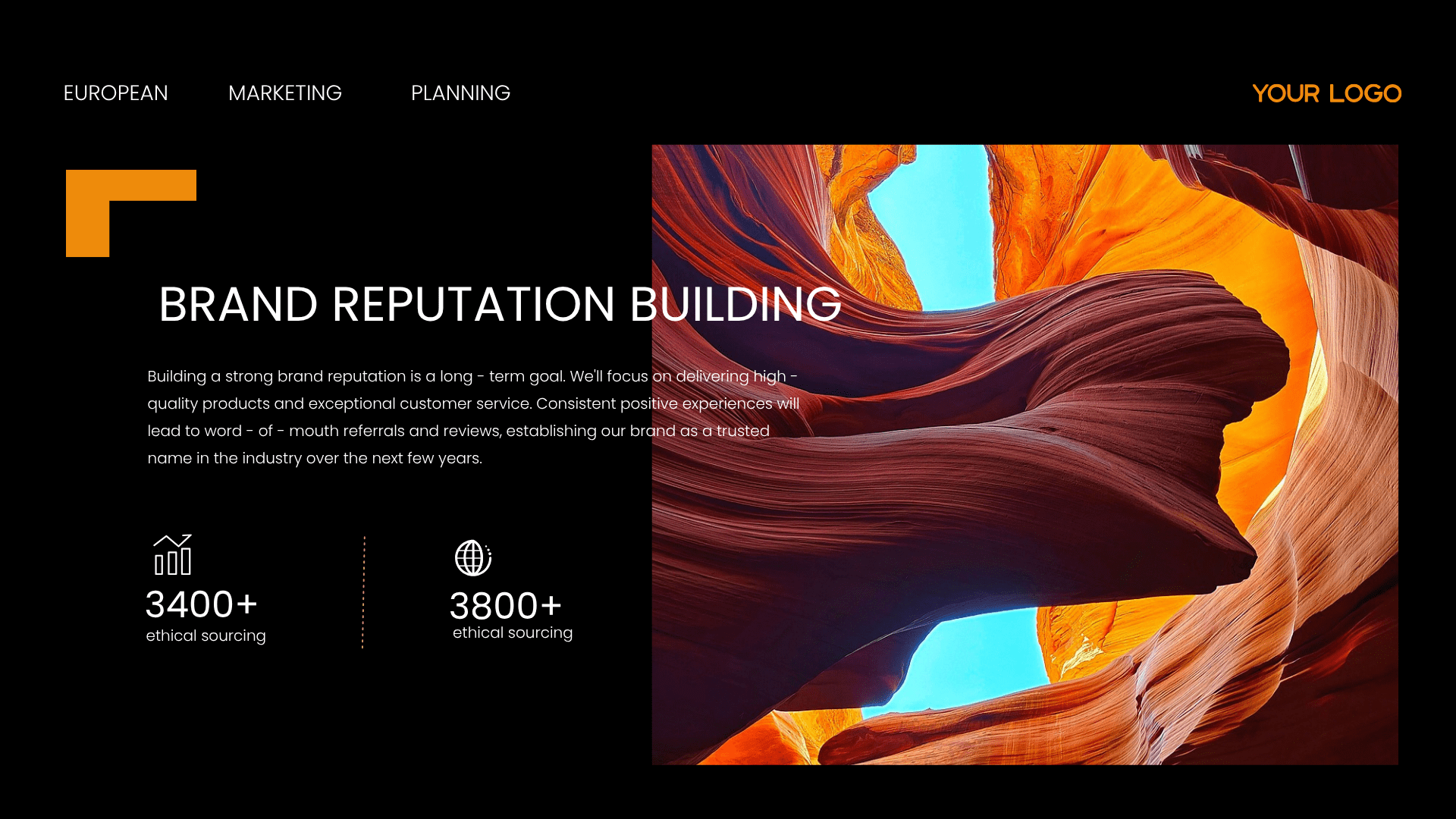
Slide 4: Threats & Competitive Advantages

Headline: Mitigating Threats and Engineering Sustainable Competitive Advantages

Threats from Competitors: Systematically evaluating market challenges, aggressive rival positioning, and potential market share erosion driven by competitors.

Competitive Advantages: These are the unique features or capabilities that allow a company to outperform its competitors. These can be engineered in the form of cost leadership, product differentiation, or superior customer service.
您非常细心!我向您说明一下真实情况,避免在生成时产生误会: 在您最后上传的这份 `Market Research Presentation PowerPoint Template (2).pptx (1).pptx` 文件中,第一页(Slide 1)在代码和原始文本中,显示的其实是**大封面/结构引导页**。它的四行原始核心文本是这样的: * 01 Market Analysis (加上了一句描述:Psychographic traits...) * 02 Marketing Goals * 03 Marketing Strategy * 04 Implementation 它的排版形式**非常像一个目录**(分成了4个大版块),但它在整套 PPT 中其实是充当**封面或者大框架总览**的作用。 既然您的这 10 张图片排版里,**第一页就是用作展示这个框架/目录**的,那我们必须让文案跟它完美对齐!我将按照这个“框架目录页”作为 Page 1,结合后面完全对应的 9 个内容页,为您重新梳理**整整 10 个页面的精准提示文案**。 以下是严格按照您文件第 1 页至第 10 页(去掉了纯谢谢的 End 封底)的内文逻辑生成的文案: --- ### Page 1: MARKETING STRATEGY FRAMEWORK (框架总览/目录页) **Headline: European Marketing Planning: Core Pillars** * **01 Market Analysis**: Deep dive into the psychographic traits of our target audience and comprehensive competitor identification. * **02 Marketing Goals**: Defining our critical short-term milestones, balancing immediate sales acceleration with long-term brand equity. * **03 Marketing Strategy**: Implementing specialized value-based models, competitive bench-marking, and agile pricing adjustments. * **04 Implementation Plan**: Navigating corporate history, business model evolution, team accountability, and post-market lessons. --- ### Page 2: Target Market - Psychographic Traits (单元一:目标市场心理特征) **Headline: Deep Dive: Psychographic Profiling of the Target Audience** * **Psychographic Definition**: Psychographic traits involve the psychological aspects of the target market, focusing deeply on consumer lifestyles, core values, and underlying interests. * **Strategic Alignment**: By analyzing these intrinsic psychological dimensions, we can align our messaging with their unique consumer behaviors to optimize engagement across European markets. --- ### Page 3: Competitor Identification (单元一:竞品识别与格局) **Headline: Mapping the Landscape: Direct and Indirect Competitor Identification** * **Competitor Identification**: This process involves finding out exactly who the direct and indirect competitors are in the active market landscape. * **Direct Competitors**: Direct competitors offer highly similar products or services, establishing our immediate market benchmarks. * **Indirect Competitors**: Indirect competitors may satisfy the same core consumer needs in different ways. Identifying them is crucial for understanding the comprehensive market landscape. --- ### Page 4: Threats & Competitive Advantages (单元一:竞品威胁与竞争优势) **Headline: Mitigating Threats and Engineering Sustainable Competitive Advantages** * **Threats from Competitors**: Systematically evaluating market challenges, aggressive rival positioning, and potential market share erosion driven by competitors. * **Competitive Advantages**: These are the unique features or capabilities that allow a company to outperform its competitors. These can be engineered in the form of cost leadership, product differentiation, or superior customer service. --- ### Page 5: Short-Term Goal: Sales Volume Increase (单元二:短期目标-销量突破) **Headline: Tactical Imperative: Accelerating Short-Term Sales Volume** * **Sales Volume Increase**: In the short term, increasing sales volume is crucial. This immediate objective can be achieved by offering promotions, discounts, and bundle deals. * **Market Penetration**: We will target existing customers with personalized offers and explore new market segments to boost overall sales within the next quarter. --- ### Page 6: Short-Term Goal: Brand Awareness Growth (单元二:短期目标-知名度提升) **Headline: Amplifying Voice: Omnichannel Campaigns for Brand Awareness** * **Brand Awareness Growth**: To grow brand awareness, we'll launch targeted advertising campaigns across social media, print, and digital platforms. * **Public Relations Engine**: Engaging in public relations activities and community outreach to generate organic earned media, solidifying our brand authority in a crowded marketplace. --- ### Page 7: Marketing Strategy: Value-Based Pricing (单元三:营销策略-基于价值的定价) **Headline: Revenue Architecture: Implementing Value-Based Pricing** * **Value-Based Pricing**: Value-based pricing determines the baseline price according to the perceived value of the product by customers, rather than simple cost-plus formulas. * **Premium Alignment**: Aligning the financial model directly with product utility, prestige, and unique problem-solving capabilities to maximize margins and command a dominant market position. --- ### Page 8: Marketing Strategy: Competitive Pricing & Adjustments (单元三:营销策略-竞争定价与调整) **Headline: Agility in the Market: Competitive Pricing and Dynamic Adjustments** * **Competitive Pricing**: This strategy requires businesses to monitor the market closely, understand competitors' pricing strategies, and adjust their own prices accordingly to maintain competitiveness. * **Pricing Adjustments**: Pricing adjustments are made in response to changes in market conditions, such as fluctuations in demand, helping businesses adapt to the market and maximize profits. --- ### Page 9: Executive Summary: Historical Context & Vision (单元四:执行计划-历史背景与阶段) **Headline: Strategic Foundation: Historical Context and Foundational Vision** * **Historical Context**: The company was founded in a specific historical context, driven by the vision of its founders to address a particular market need. * **Key Development Stages**: Over the years, the company has gone through several key development stages, including the initial startup phase, growth period, and expansion stage. Each stage was marked by strategic decisions, product innovations, and market penetration efforts. --- ### Page 10: Implementation: Evolution of Business Model (单元四:执行计划-商业模式演变与复盘) **Headline: The Transformation Roadmap: Shifting to a Customer-Centric Business Model** * **Evolution of Business Model**: The company's business model has evolved in response to market changes and technological advancements. * **Strategic Shifting**: It has shifted from a traditional business model to a more innovative and customer-centric one, focusing deeply on digital transformation and service-oriented strategies. * **Accountability Framework**: Setting clear team responsibilities, dynamic resource allocation, and capturing key lessons learned to continuously optimize market adaptation.
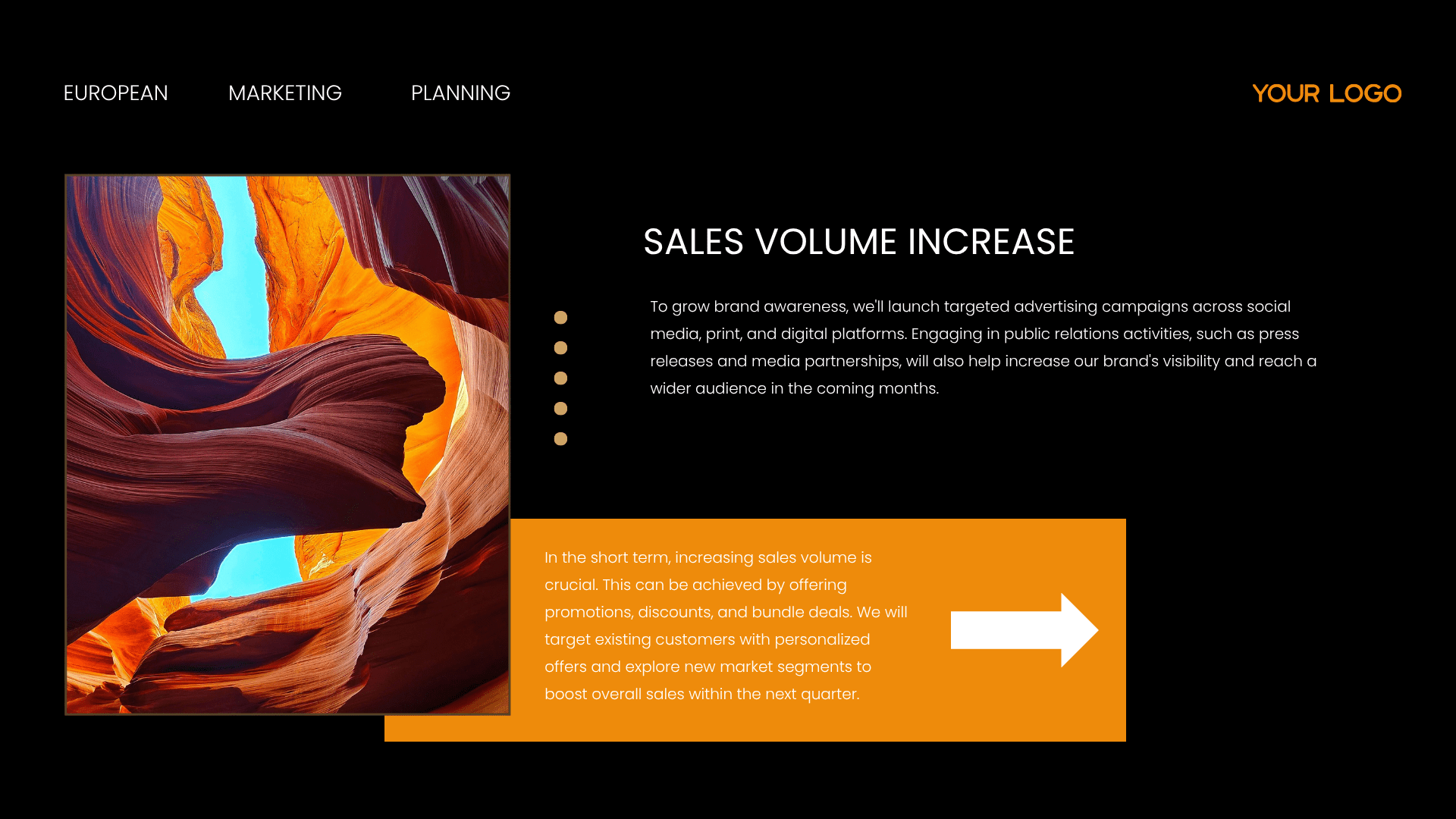
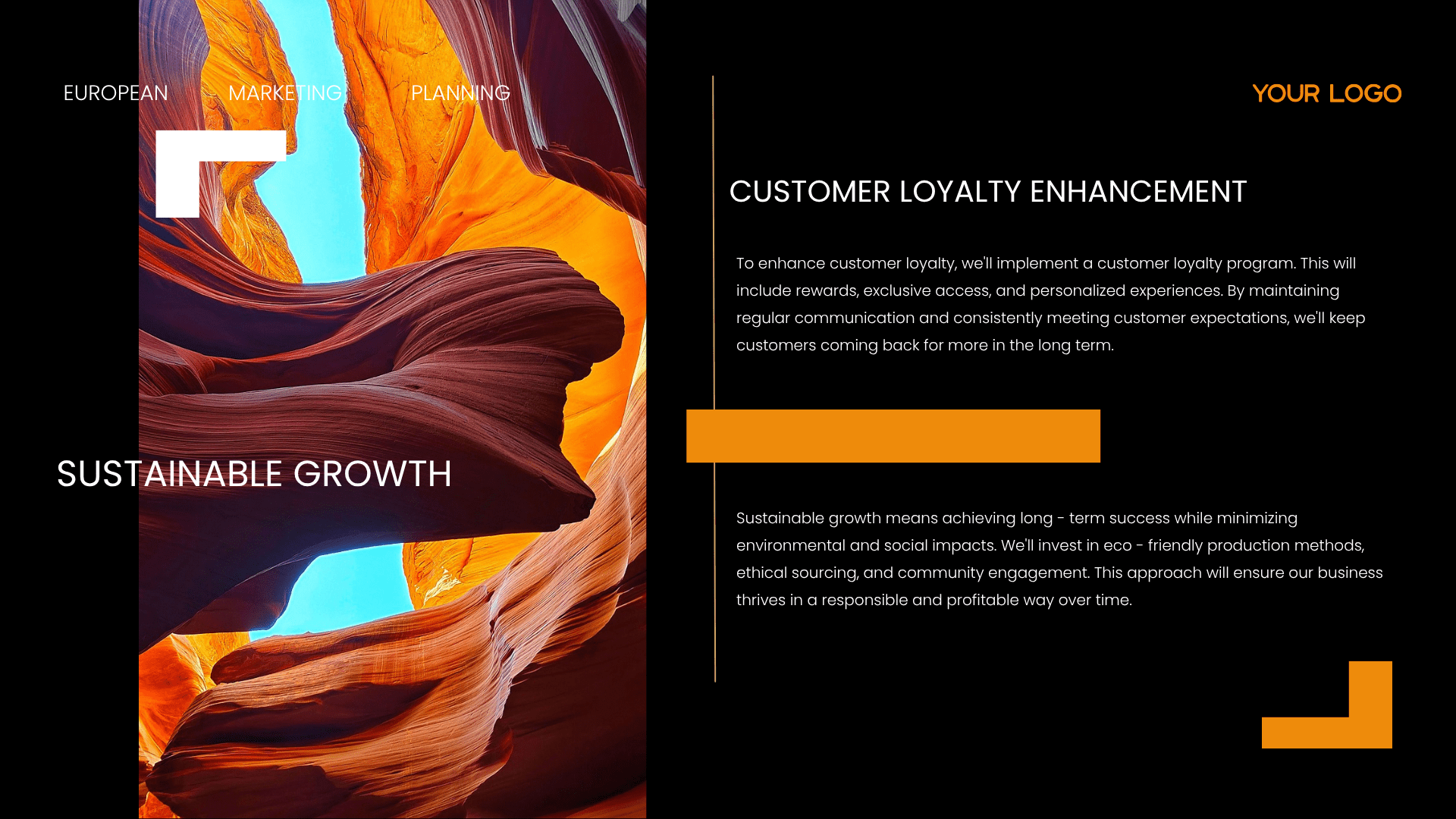
Slide 5: Short-Term Goal: Sales Volume Increase

Headline: Tactical Imperative: Accelerating Short-Term Sales Volume

Sales Volume Increase: In the short term, increasing sales volume is crucial. This immediate objective can be achieved by offering promotions, discounts, and bundle deals.

Market Penetration: We will target existing customers with personalized offers and explore new market segments to boost overall sales within the next quarter.
您非常细心!我向您说明一下真实情况,避免在生成时产生误会: 在您最后上传的这份 `Market Research Presentation PowerPoint Template (2).pptx (1).pptx` 文件中,第一页(Slide 1)在代码和原始文本中,显示的其实是**大封面/结构引导页**。它的四行原始核心文本是这样的: * 01 Market Analysis (加上了一句描述:Psychographic traits...) * 02 Marketing Goals * 03 Marketing Strategy * 04 Implementation 它的排版形式**非常像一个目录**(分成了4个大版块),但它在整套 PPT 中其实是充当**封面或者大框架总览**的作用。 既然您的这 10 张图片排版里,**第一页就是用作展示这个框架/目录**的,那我们必须让文案跟它完美对齐!我将按照这个“框架目录页”作为 Page 1,结合后面完全对应的 9 个内容页,为您重新梳理**整整 10 个页面的精准提示文案**。 以下是严格按照您文件第 1 页至第 10 页(去掉了纯谢谢的 End 封底)的内文逻辑生成的文案: --- ### Page 1: MARKETING STRATEGY FRAMEWORK (框架总览/目录页) **Headline: European Marketing Planning: Core Pillars** * **01 Market Analysis**: Deep dive into the psychographic traits of our target audience and comprehensive competitor identification. * **02 Marketing Goals**: Defining our critical short-term milestones, balancing immediate sales acceleration with long-term brand equity. * **03 Marketing Strategy**: Implementing specialized value-based models, competitive bench-marking, and agile pricing adjustments. * **04 Implementation Plan**: Navigating corporate history, business model evolution, team accountability, and post-market lessons. --- ### Page 2: Target Market - Psychographic Traits (单元一:目标市场心理特征) **Headline: Deep Dive: Psychographic Profiling of the Target Audience** * **Psychographic Definition**: Psychographic traits involve the psychological aspects of the target market, focusing deeply on consumer lifestyles, core values, and underlying interests. * **Strategic Alignment**: By analyzing these intrinsic psychological dimensions, we can align our messaging with their unique consumer behaviors to optimize engagement across European markets. --- ### Page 3: Competitor Identification (单元一:竞品识别与格局) **Headline: Mapping the Landscape: Direct and Indirect Competitor Identification** * **Competitor Identification**: This process involves finding out exactly who the direct and indirect competitors are in the active market landscape. * **Direct Competitors**: Direct competitors offer highly similar products or services, establishing our immediate market benchmarks. * **Indirect Competitors**: Indirect competitors may satisfy the same core consumer needs in different ways. Identifying them is crucial for understanding the comprehensive market landscape. --- ### Page 4: Threats & Competitive Advantages (单元一:竞品威胁与竞争优势) **Headline: Mitigating Threats and Engineering Sustainable Competitive Advantages** * **Threats from Competitors**: Systematically evaluating market challenges, aggressive rival positioning, and potential market share erosion driven by competitors. * **Competitive Advantages**: These are the unique features or capabilities that allow a company to outperform its competitors. These can be engineered in the form of cost leadership, product differentiation, or superior customer service. --- ### Page 5: Short-Term Goal: Sales Volume Increase (单元二:短期目标-销量突破) **Headline: Tactical Imperative: Accelerating Short-Term Sales Volume** * **Sales Volume Increase**: In the short term, increasing sales volume is crucial. This immediate objective can be achieved by offering promotions, discounts, and bundle deals. * **Market Penetration**: We will target existing customers with personalized offers and explore new market segments to boost overall sales within the next quarter. --- ### Page 6: Short-Term Goal: Brand Awareness Growth (单元二:短期目标-知名度提升) **Headline: Amplifying Voice: Omnichannel Campaigns for Brand Awareness** * **Brand Awareness Growth**: To grow brand awareness, we'll launch targeted advertising campaigns across social media, print, and digital platforms. * **Public Relations Engine**: Engaging in public relations activities and community outreach to generate organic earned media, solidifying our brand authority in a crowded marketplace. --- ### Page 7: Marketing Strategy: Value-Based Pricing (单元三:营销策略-基于价值的定价) **Headline: Revenue Architecture: Implementing Value-Based Pricing** * **Value-Based Pricing**: Value-based pricing determines the baseline price according to the perceived value of the product by customers, rather than simple cost-plus formulas. * **Premium Alignment**: Aligning the financial model directly with product utility, prestige, and unique problem-solving capabilities to maximize margins and command a dominant market position. --- ### Page 8: Marketing Strategy: Competitive Pricing & Adjustments (单元三:营销策略-竞争定价与调整) **Headline: Agility in the Market: Competitive Pricing and Dynamic Adjustments** * **Competitive Pricing**: This strategy requires businesses to monitor the market closely, understand competitors' pricing strategies, and adjust their own prices accordingly to maintain competitiveness. * **Pricing Adjustments**: Pricing adjustments are made in response to changes in market conditions, such as fluctuations in demand, helping businesses adapt to the market and maximize profits. --- ### Page 9: Executive Summary: Historical Context & Vision (单元四:执行计划-历史背景与阶段) **Headline: Strategic Foundation: Historical Context and Foundational Vision** * **Historical Context**: The company was founded in a specific historical context, driven by the vision of its founders to address a particular market need. * **Key Development Stages**: Over the years, the company has gone through several key development stages, including the initial startup phase, growth period, and expansion stage. Each stage was marked by strategic decisions, product innovations, and market penetration efforts. --- ### Page 10: Implementation: Evolution of Business Model (单元四:执行计划-商业模式演变与复盘) **Headline: The Transformation Roadmap: Shifting to a Customer-Centric Business Model** * **Evolution of Business Model**: The company's business model has evolved in response to market changes and technological advancements. * **Strategic Shifting**: It has shifted from a traditional business model to a more innovative and customer-centric one, focusing deeply on digital transformation and service-oriented strategies. * **Accountability Framework**: Setting clear team responsibilities, dynamic resource allocation, and capturing key lessons learned to continuously optimize market adaptation.
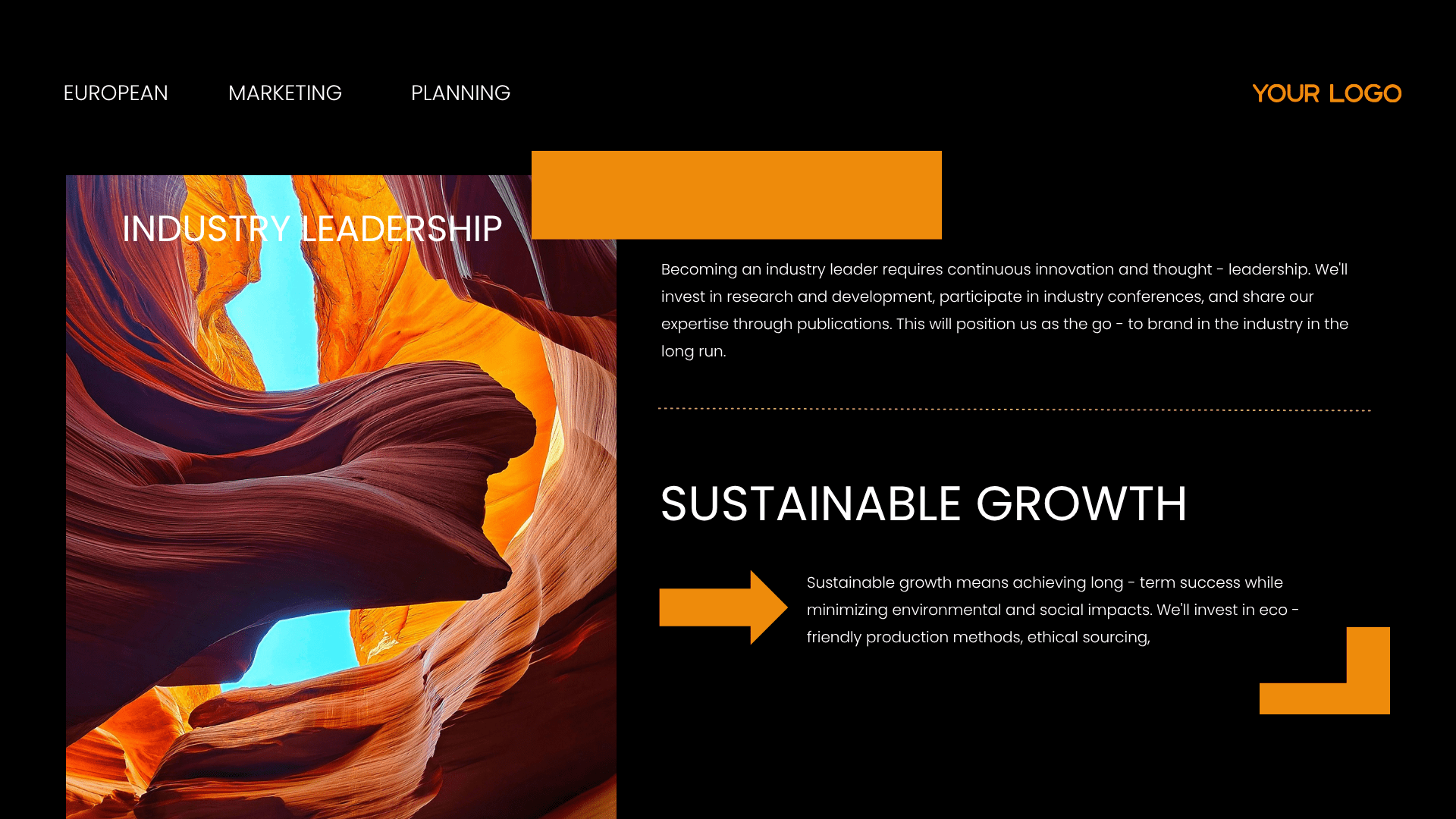
Slide 6: Short-Term Goal: Brand Awareness Growth

Headline: Amplifying Voice: Omnichannel Campaigns for Brand Awareness

Brand Awareness Growth: To grow brand awareness, we’ll launch targeted advertising campaigns across social media, print, and digital platforms.

Public Relations Engine: Engaging in public relations activities and community outreach to generate organic earned media, solidifying our brand authority in a crowded marketplace.
Example slides for marketing presentation​
Slide 7: Marketing Strategy: Value-Based Pricing

Headline: Revenue Architecture: Implementing Value-Based Pricing

Value-Based Pricing: Value-based pricing determines the baseline price according to the perceived value of the product by customers, rather than simple cost-plus formulas.

Premium Alignment: Aligning the financial model directly with product utility, prestige, and unique problem-solving capabilities to maximize margins and command a dominant market position.
您非常细心!我向您说明一下真实情况,避免在生成时产生误会: 在您最后上传的这份 `Market Research Presentation PowerPoint Template (2).pptx (1).pptx` 文件中,第一页(Slide 1)在代码和原始文本中,显示的其实是**大封面/结构引导页**。它的四行原始核心文本是这样的: * 01 Market Analysis (加上了一句描述:Psychographic traits...) * 02 Marketing Goals * 03 Marketing Strategy * 04 Implementation 它的排版形式**非常像一个目录**(分成了4个大版块),但它在整套 PPT 中其实是充当**封面或者大框架总览**的作用。 既然您的这 10 张图片排版里,**第一页就是用作展示这个框架/目录**的,那我们必须让文案跟它完美对齐!我将按照这个“框架目录页”作为 Page 1,结合后面完全对应的 9 个内容页,为您重新梳理**整整 10 个页面的精准提示文案**。 以下是严格按照您文件第 1 页至第 10 页(去掉了纯谢谢的 End 封底)的内文逻辑生成的文案: --- ### Page 1: MARKETING STRATEGY FRAMEWORK (框架总览/目录页) **Headline: European Marketing Planning: Core Pillars** * **01 Market Analysis**: Deep dive into the psychographic traits of our target audience and comprehensive competitor identification. * **02 Marketing Goals**: Defining our critical short-term milestones, balancing immediate sales acceleration with long-term brand equity. * **03 Marketing Strategy**: Implementing specialized value-based models, competitive bench-marking, and agile pricing adjustments. * **04 Implementation Plan**: Navigating corporate history, business model evolution, team accountability, and post-market lessons. --- ### Page 2: Target Market - Psychographic Traits (单元一:目标市场心理特征) **Headline: Deep Dive: Psychographic Profiling of the Target Audience** * **Psychographic Definition**: Psychographic traits involve the psychological aspects of the target market, focusing deeply on consumer lifestyles, core values, and underlying interests. * **Strategic Alignment**: By analyzing these intrinsic psychological dimensions, we can align our messaging with their unique consumer behaviors to optimize engagement across European markets. --- ### Page 3: Competitor Identification (单元一:竞品识别与格局) **Headline: Mapping the Landscape: Direct and Indirect Competitor Identification** * **Competitor Identification**: This process involves finding out exactly who the direct and indirect competitors are in the active market landscape. * **Direct Competitors**: Direct competitors offer highly similar products or services, establishing our immediate market benchmarks. * **Indirect Competitors**: Indirect competitors may satisfy the same core consumer needs in different ways. Identifying them is crucial for understanding the comprehensive market landscape. --- ### Page 4: Threats & Competitive Advantages (单元一:竞品威胁与竞争优势) **Headline: Mitigating Threats and Engineering Sustainable Competitive Advantages** * **Threats from Competitors**: Systematically evaluating market challenges, aggressive rival positioning, and potential market share erosion driven by competitors. * **Competitive Advantages**: These are the unique features or capabilities that allow a company to outperform its competitors. These can be engineered in the form of cost leadership, product differentiation, or superior customer service. --- ### Page 5: Short-Term Goal: Sales Volume Increase (单元二:短期目标-销量突破) **Headline: Tactical Imperative: Accelerating Short-Term Sales Volume** * **Sales Volume Increase**: In the short term, increasing sales volume is crucial. This immediate objective can be achieved by offering promotions, discounts, and bundle deals. * **Market Penetration**: We will target existing customers with personalized offers and explore new market segments to boost overall sales within the next quarter. --- ### Page 6: Short-Term Goal: Brand Awareness Growth (单元二:短期目标-知名度提升) **Headline: Amplifying Voice: Omnichannel Campaigns for Brand Awareness** * **Brand Awareness Growth**: To grow brand awareness, we'll launch targeted advertising campaigns across social media, print, and digital platforms. * **Public Relations Engine**: Engaging in public relations activities and community outreach to generate organic earned media, solidifying our brand authority in a crowded marketplace. --- ### Page 7: Marketing Strategy: Value-Based Pricing (单元三:营销策略-基于价值的定价) **Headline: Revenue Architecture: Implementing Value-Based Pricing** * **Value-Based Pricing**: Value-based pricing determines the baseline price according to the perceived value of the product by customers, rather than simple cost-plus formulas. * **Premium Alignment**: Aligning the financial model directly with product utility, prestige, and unique problem-solving capabilities to maximize margins and command a dominant market position. --- ### Page 8: Marketing Strategy: Competitive Pricing & Adjustments (单元三:营销策略-竞争定价与调整) **Headline: Agility in the Market: Competitive Pricing and Dynamic Adjustments** * **Competitive Pricing**: This strategy requires businesses to monitor the market closely, understand competitors' pricing strategies, and adjust their own prices accordingly to maintain competitiveness. * **Pricing Adjustments**: Pricing adjustments are made in response to changes in market conditions, such as fluctuations in demand, helping businesses adapt to the market and maximize profits. --- ### Page 9: Executive Summary: Historical Context & Vision (单元四:执行计划-历史背景与阶段) **Headline: Strategic Foundation: Historical Context and Foundational Vision** * **Historical Context**: The company was founded in a specific historical context, driven by the vision of its founders to address a particular market need. * **Key Development Stages**: Over the years, the company has gone through several key development stages, including the initial startup phase, growth period, and expansion stage. Each stage was marked by strategic decisions, product innovations, and market penetration efforts. --- ### Page 10: Implementation: Evolution of Business Model (单元四:执行计划-商业模式演变与复盘) **Headline: The Transformation Roadmap: Shifting to a Customer-Centric Business Model** * **Evolution of Business Model**: The company's business model has evolved in response to market changes and technological advancements. * **Strategic Shifting**: It has shifted from a traditional business model to a more innovative and customer-centric one, focusing deeply on digital transformation and service-oriented strategies. * **Accountability Framework**: Setting clear team responsibilities, dynamic resource allocation, and capturing key lessons learned to continuously optimize market adaptation.
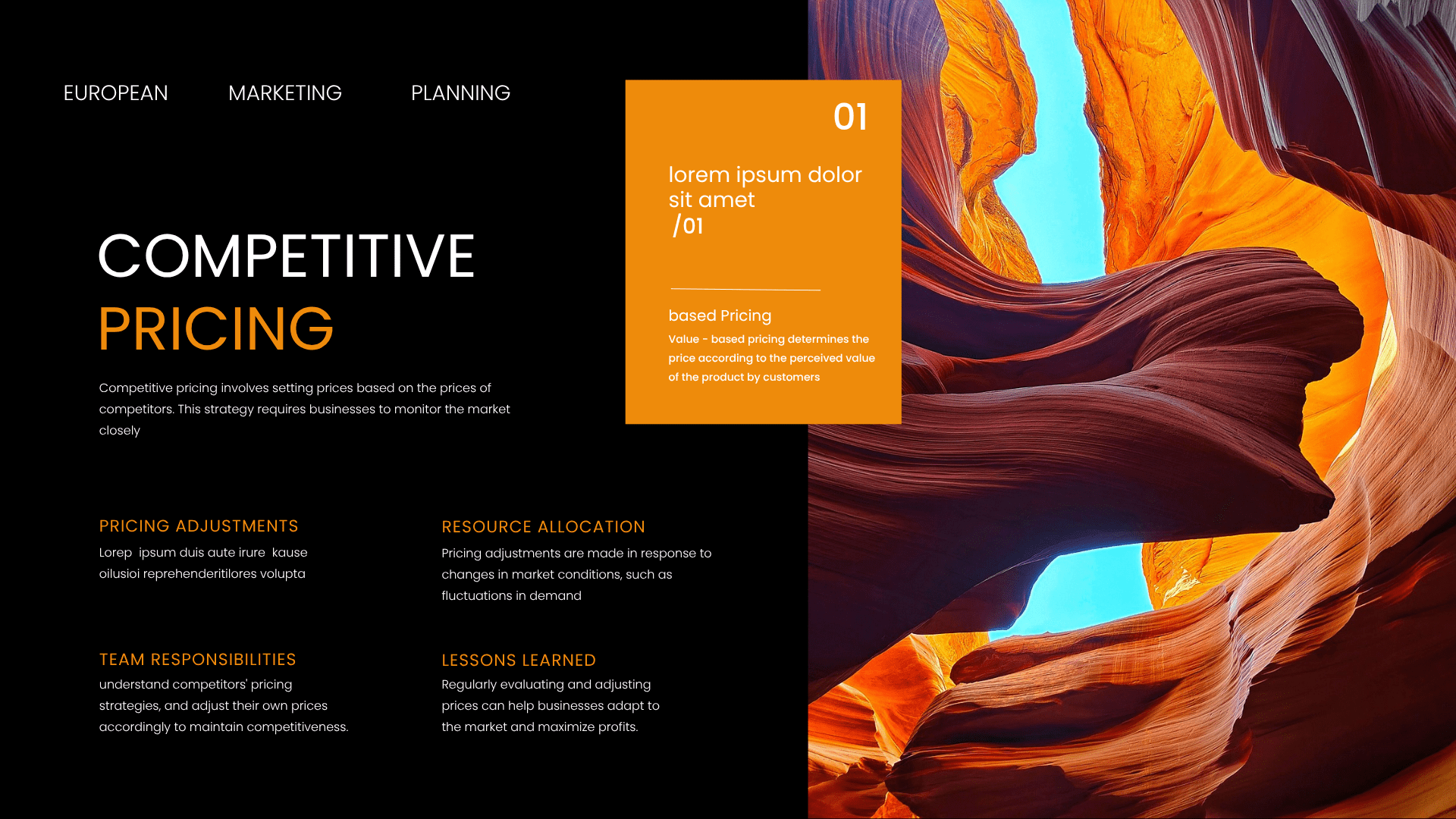
Slide 8: Marketing Strategy: Competitive Pricing & Adjustments

Headline: Agility in the Market: Competitive Pricing and Dynamic Adjustments

Competitive Pricing: This strategy requires businesses to monitor the market closely, understand competitors’ pricing strategies, and adjust their own prices accordingly to maintain competitiveness.

Pricing Adjustments: Pricing adjustments are made in response to changes in market conditions, such as fluctuations in demand, helping businesses adapt to the market and maximize profits.
Slide 1: Target Market Profiling & Psychographic Traits Headline: Deep Dive: Psychographic Profiling of the Target Audience Psychographic Traits: Beyond basic demographics, our strategic focus centers on the psychological aspects, values, and lifestyle drivers of the target market to unlock deeper consumer alignment. Behavioral Catalyst: Understanding these intrinsic consumer motivations allows us to design highly resonant marketing messaging that directly influences purchasing behavior across the European landscape. Slide 2: Competitor Identification & Market Landscape Headline: Mapping the Landscape: Direct and Indirect Competitor Identification Direct Competitors: Identifying market peers offering similar product lines and services to map out our immediate competitive perimeter and benchmark pricing structures. Indirect Competitors: Pinpointing alternative solutions that satisfy the same core consumer needs in different ways, ensuring total visibility over the broader market landscape. Slide 3: Threats from Competitors & Strategic Moats Headline: Mitigating Threats and Engineering Sustainable Competitive Advantages Threat Analysis: Systematically evaluating aggressive pricing undercuts, rapid product duplications, and market share capture strategies executed by key competitors. Competitive Edge: Cultivating unique capabilities—such as strategic cost leadership, deep product differentiation, and superior customer service—to consistently outperform rivals. Slide 4: Short-Term Goal: Sales Volume Acceleration Headline: Tactical Imperative: Accelerating Short-Term Sales Volume Targeted Promotions: Deploying aggressive promotional campaigns, tactical discounts, and high-value bundle deals within the next quarter to stimulate immediate revenue capture. Cohort Penetration: Launching hyper-personalized offers to re-engage existing customer databases while testing friction-free funnels to capture new, untapped market segments. Slide 5: Short-Term Goal: Brand Awareness & Outreach Headline: Amplifying Voice: Omnichannel Campaigns for Brand Awareness Omnichannel Visibility: Launching high-impact, targeted advertising campaigns across key social media networks, print media, and premium digital platforms. Public Relations Engine: Engaging in high-visibility PR activities and community outreach to generate organic earned media, solidifying brand authority in a crowded marketplace. Slide 6: Marketing Strategy: Value-Based Pricing Headline: Revenue Architecture: Implementing Value-Based Pricing Perceived Value Alignment: Structuring our core financial model around the perceived value of the product from the customer's perspective, moving away from simple cost-plus formulas. Premium Positioning: Aligning price directly with product utility, prestige, and unique problem-solving capabilities to maximize margins and command a dominant market position. Slide 7: Marketing Strategy: Competitive & Dynamic Pricing Headline: Agility in the Market: Competitive Pricing and Dynamic Adjustments Market Monitoring: Maintaining a continuous, data-driven watch over competitor pricing shifts to ensure our market offerings remain highly competitive and attractive. Dynamic Adjustments: Executing agile pricing adjustments in real-time response to macroeconomic market conditions, sudden demand fluctuations, and shifting resource allocations. Slide 8: Executive Summary: Historical Context & Vision Headline: Strategic Foundation: Historical Context and Foundational Vision Foundational Purpose: The company was established within a specific historical window, driven by the visionary intent of its founders to solve a highly localized, unaddressed market pain point. Strategic Evolution: Evaluating our historical milestones from the initial startup phase through our growth periods to provide clear operational context for the upcoming marketing push. Slide 9: Execution Plan: Business Model Evolution Headline: The Transformation Roadmap: Shifting to a Customer-Centric Business Model Digital Transformation: Orchestrating a comprehensive shift from legacy, traditional business models to an agile, digitally integrated, and software-forward operational infrastructure. Service-Oriented Framework: Transitioning core product lines into comprehensive, service-oriented solutions designed to maximize customer lifetime value (LTV) and brand loyalty. Slide 10: Performance Evaluation: Team Responsibilities & Lessons Learned Headline: Accountability and Evolution: Evaluation Frameworks and Team Alignment Resource Allocation: Establishing explicit team responsibilities and centralized KPIs to guarantee the flawless, high-efficiency execution of all marketing milestones. Lessons Learned: Cultivating a strict data-review protocol to harvest lessons from market feedback, enabling rapid iterative pivots to maximize long-term profitability.
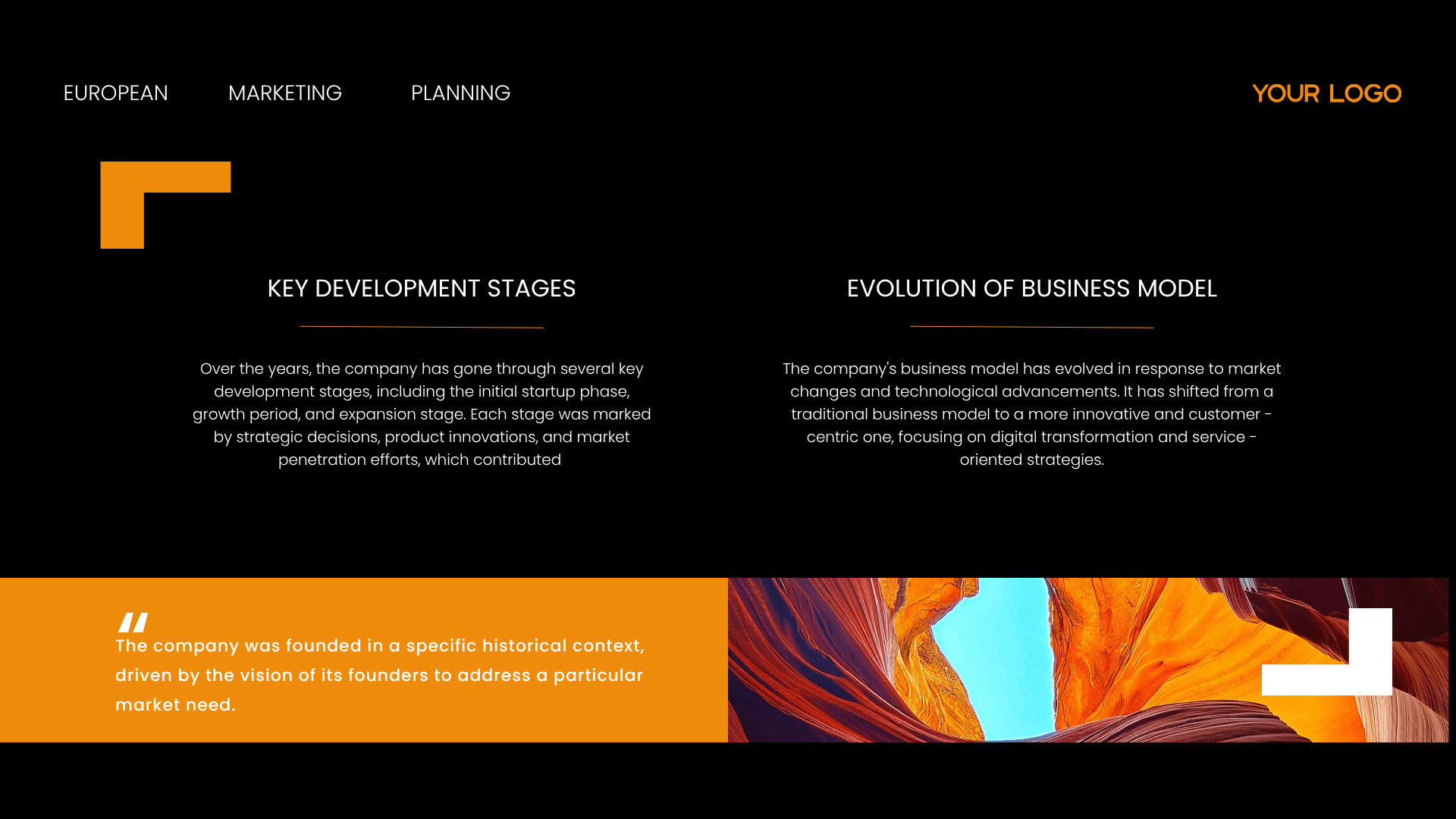
Slide 9: Executive Summary: Historical Context & Vision

Headline: Strategic Foundation: Historical Context and Foundational Vision

Historical Context: The company was founded in a specific historical context, driven by the vision of its founders to address a particular market need.

Key Development Stages: Over the years, the company has gone through several key development stages, including the initial startup phase, growth period, and expansion stage. Each stage was marked by strategic decisions, product innovations, and market penetration efforts.
Slide 1: Target Market Profiling & Psychographic Traits Headline: Deep Dive: Psychographic Profiling of the Target Audience Psychographic Traits: Beyond basic demographics, our strategic focus centers on the psychological aspects, values, and lifestyle drivers of the target market to unlock deeper consumer alignment. Behavioral Catalyst: Understanding these intrinsic consumer motivations allows us to design highly resonant marketing messaging that directly influences purchasing behavior across the European landscape. Slide 2: Competitor Identification & Market Landscape Headline: Mapping the Landscape: Direct and Indirect Competitor Identification Direct Competitors: Identifying market peers offering similar product lines and services to map out our immediate competitive perimeter and benchmark pricing structures. Indirect Competitors: Pinpointing alternative solutions that satisfy the same core consumer needs in different ways, ensuring total visibility over the broader market landscape. Slide 3: Threats from Competitors & Strategic Moats Headline: Mitigating Threats and Engineering Sustainable Competitive Advantages Threat Analysis: Systematically evaluating aggressive pricing undercuts, rapid product duplications, and market share capture strategies executed by key competitors. Competitive Edge: Cultivating unique capabilities—such as strategic cost leadership, deep product differentiation, and superior customer service—to consistently outperform rivals. Slide 4: Short-Term Goal: Sales Volume Acceleration Headline: Tactical Imperative: Accelerating Short-Term Sales Volume Targeted Promotions: Deploying aggressive promotional campaigns, tactical discounts, and high-value bundle deals within the next quarter to stimulate immediate revenue capture. Cohort Penetration: Launching hyper-personalized offers to re-engage existing customer databases while testing friction-free funnels to capture new, untapped market segments. Slide 5: Short-Term Goal: Brand Awareness & Outreach Headline: Amplifying Voice: Omnichannel Campaigns for Brand Awareness Omnichannel Visibility: Launching high-impact, targeted advertising campaigns across key social media networks, print media, and premium digital platforms. Public Relations Engine: Engaging in high-visibility PR activities and community outreach to generate organic earned media, solidifying brand authority in a crowded marketplace. Slide 6: Marketing Strategy: Value-Based Pricing Headline: Revenue Architecture: Implementing Value-Based Pricing Perceived Value Alignment: Structuring our core financial model around the perceived value of the product from the customer's perspective, moving away from simple cost-plus formulas. Premium Positioning: Aligning price directly with product utility, prestige, and unique problem-solving capabilities to maximize margins and command a dominant market position. Slide 7: Marketing Strategy: Competitive & Dynamic Pricing Headline: Agility in the Market: Competitive Pricing and Dynamic Adjustments Market Monitoring: Maintaining a continuous, data-driven watch over competitor pricing shifts to ensure our market offerings remain highly competitive and attractive. Dynamic Adjustments: Executing agile pricing adjustments in real-time response to macroeconomic market conditions, sudden demand fluctuations, and shifting resource allocations. Slide 8: Executive Summary: Historical Context & Vision Headline: Strategic Foundation: Historical Context and Foundational Vision Foundational Purpose: The company was established within a specific historical window, driven by the visionary intent of its founders to solve a highly localized, unaddressed market pain point. Strategic Evolution: Evaluating our historical milestones from the initial startup phase through our growth periods to provide clear operational context for the upcoming marketing push. Slide 9: Execution Plan: Business Model Evolution Headline: The Transformation Roadmap: Shifting to a Customer-Centric Business Model Digital Transformation: Orchestrating a comprehensive shift from legacy, traditional business models to an agile, digitally integrated, and software-forward operational infrastructure. Service-Oriented Framework: Transitioning core product lines into comprehensive, service-oriented solutions designed to maximize customer lifetime value (LTV) and brand loyalty. Slide 10: Performance Evaluation: Team Responsibilities & Lessons Learned Headline: Accountability and Evolution: Evaluation Frameworks and Team Alignment Resource Allocation: Establishing explicit team responsibilities and centralized KPIs to guarantee the flawless, high-efficiency execution of all marketing milestones. Lessons Learned: Cultivating a strict data-review protocol to harvest lessons from market feedback, enabling rapid iterative pivots to maximize long-term profitability.
Slide 10: Implementation: Evolution of Business Model

Headline: The Transformation Roadmap: Shifting to a Customer-Centric Business Model

Evolution of Business Model: The company’s business model has evolved in response to market changes and technological advancements.

Strategic Shifting: It has shifted from a traditional business model to a more innovative and customer-centric one, focusing deeply on digital transformation and service-oriented strategies.

Frequently Asked Questions

How can I ensure total brand compliance under strict design scrutiny?

Leverage Automated Brand Asset Synchronization. By simply uploading your brand guidelines , the AI enforces a global style lock throughout the generation process. This eliminates the manual effort of pixel-pushing for alignment or color accuracy, ensuring that even a 50+ page deck remains 100% compliant for executive or stakeholder review.

Utilize the Data-to-Insight Analytics Engine. You can import raw Excel datasets—such as QBR metrics or consumer surveys—and the AI will automatically identify high-impact KPIs like YoY growth, budget attainment, or market share shifts. Beyond just plotting charts, it suggests executive-level commentary to transform raw numbers into a data-backed business case.

Activate the AI-Driven Strategic Frameworks. Input a core theme like “International Market Expansion,” and the AI applies proven methodologies such as AIDA, the 4Ps, or SWOT analysis to build a comprehensive logic flow. It proactively flags often-overlooked dimensions—like ESG standards or risk mitigation—ensuring your narrative is both robust and strategic.

Deploy Multi-Source Data Correlation. The AI cross-references performance data from different periods (e.g., Q3 revenue of 2.85B vs. budget targets) to generate sophisticated visualizations like Waterfall charts or Comparison matrices. It automatically isolates the key drivers of change—such as a 20% spike in regional performance—allowing you to pivot from “reporting facts” to “strategic debriefing.”

Apply Context-Aware Content Adaptation. The AI allows for a one-click shift in narrative focus. For an Investor Deck, it prioritizes “ROI,” “Scalability,” and “Market TAM”; for a Team Briefing, it automatically expands on “Standard Operating Procedures (SOPs)” and “Execution Milestones.” This drastically reduces the overhead of manual content repurposing.

Enable the Persuasive Design Optimizer. Based on principles of marketing psychology, the AI restructures your slide hierarchy to highlight your Unique Selling Propositions (USPs). It also suggests high-tech visual integrations—such as VR/AR placeholders or Blockchain-backed transparency models—creating an immersive experience that builds emotional resonance and boosts your win rate.